



Onyx is deep black, velvety lustrous, and radiates a calm, serious power. In lithotherapy, it is regarded as a stone of protection, inner strength, and self-control — a grounding companion for difficult times. In this guide, you’ll find everything about the traditional healing properties of Onyx, its meaning, uses, and proper care — compiled by a specialist retailer.
Onyx — quick facts at a glance
| Mineral class | Oxide — chalcedony (microcrystalline quartz, SiO₂) |
| Color | deep black, often with fine white banding |
| Hardness (Mohs) | 6.5 to 7 |
| Crystal system | trigonal (microcrystalline) |
| Chakra | Root chakra (Muladhara) |
| Zodiac sign | Capricorn (main), Aries, Leo |
| Element | Earth |
| Special feature | banded variety of chalcedony — layered stone |
| Suitable for gemstone water | Suitable (robust) — see care |
| Sunlight | Use with caution — dyed Onyx can fade |
| Main sources | Brazil, India, Uruguay, Mexico |
What is Onyx? Mineralogy and origin
Onyx is a black, banded variety of chalcedony — that is, microcrystalline quartz (SiO₂) — with a Mohs hardness of 6.5 to 7. It is opaque, deep black, and takes on a beautiful, velvety polish.
The name comes from the Greek onyx, meaning “fingernail” or “claw.” Its characteristic feature is its fine, parallel layers (bands) — in classic layered Onyx, black and white layers alternate, which is why it has long been used for cameos and engraved gems since antiquity.
Important to know: A large share of black Onyx on the market is color-treated (heated/dyed) agate — a traditional, centuries-old method. Dyed Onyx may fade slightly in prolonged sunlight, so dark storage is recommended. Main sources are Brazil, India, Uruguay, and Mexico.
Meaning & history
Already in ancient Egypt and in Greco-Roman antiquity, Onyx was highly valued — as a material for signet rings, cameos, engraved gems, and artistic carvings.
In many cultures, the deep black stone was considered a stone of protection and defense, said to shield against negative influences and provide support in crises. Its serious black color also made it a classic mourning stone.
In modern lithotherapy, Onyx is the classic stone of self-control and inner strength — a grounding companion said to help master difficult phases with steadfastness and discipline.
Traditional healing properties of Onyx for the psyche
When someone asks us for a stone for more inner strength, protection, or self-control during a hard phase, Onyx is a typical recommendation. In lithotherapy, the following effects are attributed to it:
- Protection & defense: The classic — Onyx is said to act like a protective shield against negative influences and energies.
- Inner strength & steadfastness: Said to provide support and help you remain steadfast and composed, even in crises.
- Self-control & discipline: Associated with self-control, perseverance, and a clear, cool head.
- Grounding & stability: As a black root stone, it is said to ground, center, and provide a secure foundation.
- Releasing grief: Traditionally a mourning stone, said to help process and let go of heavy emotions.
- Decision-making power: Said to support clear thoughts and greater firmness in important decisions.
Onyx is therefore especially suitable for phases in which protection, steadfastness, discipline, or grounding are important — and for people who feel insecure, overwhelmed, or energetically unprotected.
Traditional healing properties of Onyx for the body
In traditional lithotherapy, the following physical effects are attributed to Onyx — these statements come from transmitted descriptions and are not a substitute for a medical diagnosis or treatment.
- Grounding & stability: In folk healing, traditionally associated with a grounded, stable bodily feeling.
- Immune system: Described in tradition as a strengthening, fortifying stone for the body’s defenses.
- Bones & teeth: In old descriptions, associated with the musculoskeletal system, bones, and teeth.
- Feet & legs: As a root stone, traditionally assigned to the lower body, feet, and legs.
- Nerves & calm: Said to promote more inner calm and a firm stance during tension.
- Regeneration: Considered a strengthening companion during exhaustion and recovery phases.
Onyx has a hardness of 6.5–7, is robust, and is generally suitable for gemstone water. However, with dyed Onyx, it is advisable to use it as a tumbled stone, cabochon, or jewelry rather than in water, as color treatments are not always water-resistant. If in doubt, wear it on the body.

Onyx and the chakras
In chakra teachings, Onyx is assigned to the Root chakra (Muladhara) — the energy center at the lower end of the spine, which stands for safety, grounding, stability, and primal trust. Its deep black color fits this grounding base chakra perfectly.
As a black protective stone, Onyx is said to strengthen the root chakra, connect firmly with the earth, and provide a stable, secure foundation — especially when life feels uncertain or threatening.
In practice, Onyx is worn on the body, placed in a trouser pocket, or laid on the root chakra — as a grounding, protective anchor for everyday life.
Onyx & the 7 main chakras
Onyx is a grounding root stone — it is said to provide protection, stability, and inner strength.
Onyx and the zodiac signs
Astrologically, Onyx is considered the main stone for Capricorn — the disciplined, earth-connected sign. It is said to strengthen Capricorn’s steadfastness, self-control, and perseverance.
As a secondary stone, it also suits Aries (self-assertion) and Leo (inner strength). As a protective and grounding stone, however, Onyx suits anyone seeking more support, discipline, and energetic protection.
Using Onyx in everyday life
1. As jewelry — protection on the body
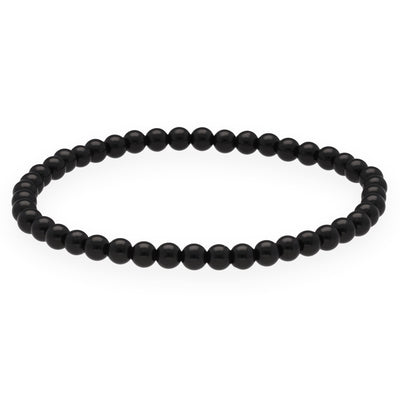
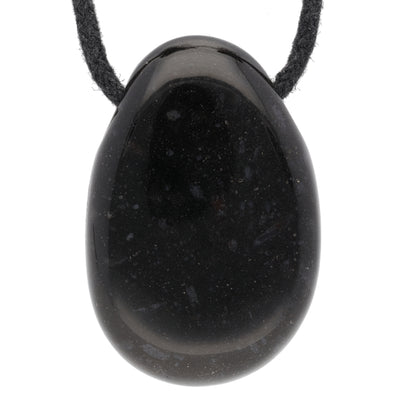
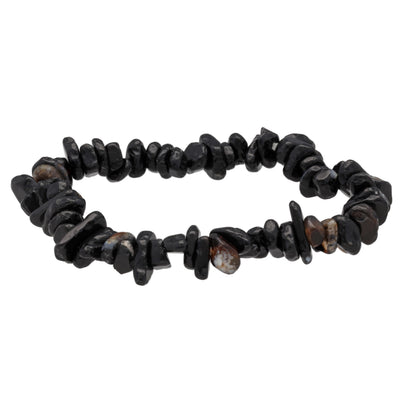
An Onyx bracelet or pendant is said to provide lasting protection, grounding, and support during stressful phases.
2. In the trouser pocket — the anchor on the go
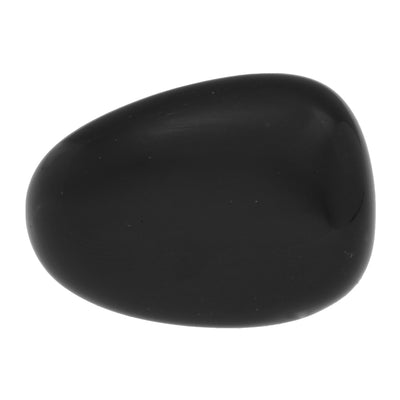
Carry a small Onyx tumbled stone with you and hold it in your hand in uncertain moments — said to ground and calm.
3. At the workplace — for discipline & focus
An Onyx on the desk is said to strengthen self-control, concentration, and perseverance.
4. In meditation — for grounding
Place Onyx on the root chakra (lower end of the spine). Said to center, ground, and provide inner support.
5. As a protective stone in the entrance area
An Onyx by the front door is said to act like a shield against negative outside influences.
Onyx bei Lebensquelle Plus
Echte Naturqualität — versandfertig aus Waldbröl, geprüfter Fachhandel.
Cleaning and charging Onyx
Cleaning & charging Onyx
Onyx is robust with a hardness of 6.5–7 and uncomplicated — with dyed Onyx, only a little caution with sun and water is advisable.
Discharge
Rinse under running lukewarm water and dry. With dyed Onyx, keep the water contact brief and dry well.
Alternatively, discharge overnight in a bowl with hematite tumbled stones.
Charge
Charge in moonlight or on a hematite bowl — gentle and without fading.
A rock crystal cluster also keeps Onyx energetically fresh.
⚠️ Dyed Onyx (common in the trade) can fade in prolonged sunlight — therefore do NOT place it in direct sun and store it in the dark. No acids and no aggressive cleaners.
Recognizing authenticity
Black Onyx on the market is very often color-treated agate — this is traditionally common. These features help with classification:
- Banding: genuine layered Onyx shows fine, straight parallel layers (black/white). Uniformly dyed deep black is usually color-treated agate.
- Color treatment is normal: the vast majority of “black Onyx” is heated/dyed agate — a centuries-old, accepted method. What matters is honest declaration.
- Hardness: Onyx scratches glass with 6.5–7. A “stone” that scratches itself easily is a glass or plastic imitation.
- Feel & temperature: genuine Onyx feels cool and stony; glass or plastic imitations often feel warmer and lighter.
- Luster: genuine Onyx takes on a deep, velvety polish — no air bubbles like in dyed glass.
Genuine Onyx is opaque deep black, hard, and cool-stony. At Lebensquelle Plus, we declare color treatments honestly and pay attention to clean natural quality.
Combining Onyx with other stones
- Onyx + rock crystal — rock crystal clarifies and amplifies the protective, grounding effect of Onyx.
- Onyx + black tourmaline — double protection & grounding — a strong set against negative influences.
- Onyx + hematite — concentrated grounding — both are considered stabilizing, protective root stones.
- Onyx + rose quartz — strength meets gentleness — protection outwardly, comfort and warmth inwardly.
- Onyx + amethyst — protection & inner calm — grounding and at the same time clarifying for the mind.
Frequently asked questions about the effects of Onyx
01 What does Onyx do? +
In lithotherapy, Onyx is considered a stone of protection, inner strength, and self-control. It is said to act like a shield against negative influences, provide support in crises, and promote discipline and steadfastness. As a black root stone, it is said to ground and stabilize.
02 Is black Onyx dyed? +
Very often, yes. A large share of black Onyx on the market is color-treated (heated/dyed) agate — a traditional, centuries-old and accepted method. This is not a defect, but it should be honestly declared. Dyed Onyx can fade in prolonged sunlight, so store it in the dark.
03 Can Onyx go in water? +
Onyx is robust with a hardness of 6.5–7 and generally water-resistant. With dyed Onyx, keep the water contact brief and dry it well, as color treatments are not always fully water-resistant. For gemstone water, natural-colored Onyx is best; if in doubt, wear the stone on the body instead.
04 How do I care for Onyx properly? +
Cleaning: rinse under running lukewarm water. Charging: in moonlight or on a hematite bowl — gentle and without fading. Avoid: direct sun (dyed Onyx can fade), acids, aggressive cleaners. Store in the dark. Full guide: Cleaning and charging gemstones.
05 Which zodiac sign is Onyx for? +
Onyx is primarily assigned to Capricorn, the disciplined, earth-connected sign. As secondary signs, it suits Aries and Leo. As a protective and grounding stone, however, it suits anyone seeking more support, self-control, and energetic protection.
06 How do I recognize genuine Onyx? +
Genuine Onyx is opaque deep black, hard (6.5–7), and feels cool and stony. Layered Onyx shows fine straight bands. Note: black Onyx is very often color-treated agate — traditionally common and not fake, but it should be declared. Glass imitations reveal themselves through air bubbles and lower weight.
07 Which stones go well with Onyx? +
Classic combinations: Onyx + rock crystal (amplification), Onyx + black tourmaline (double protection), Onyx + hematite (grounding), Onyx + rose quartz (strength & comfort), Onyx + amethyst (protection & calm).
08 Is Onyx suitable as a gift? +
Very much so — Onyx is an elegant, powerful gift for anyone who needs protection, support, or more inner strength. As a bracelet, pendant, or tumbled stone, the noble black stone stands for steadfastness, discipline, and grounding — especially in challenging phases of life.
Conclusion
Onyx — the quiet power of black. In lithotherapy, the classic stone for protection, inner strength, and self-control. Anyone seeking more support, discipline, or an energetic shield in difficult phases will find in Onyx a grounding, steadfast companion.
In our Onyx range ↗ you’ll find tumbled stones, cabochons, and jewelry in clean quality — ready to ship from Waldbröl or directly on site in our store in Nümbrecht.
Important note: The effects described here come from traditional lithotherapy and are not scientifically proven. They do not replace medical diagnosis or treatment. If you have health concerns, please consult a doctor.
Further gemstone guides
- Rock crystal meaning — meaning, use & cleansing
- Amethyst meaning — meaning, use & cleansing
- Cleaning and charging gemstones — the easy way
- Black Tourmaline — protection & grounding
- Hematite meaning — grounding & strength
- View all Onyx products