


The Amethyst has been one of the most important protective and healing stones for thousands of years — Cleopatra wore it, Hildegard of Bingen prescribed it, and in the Bible it adorns the breastplate of the high priest. Its deep violet color symbolically stands for clarity, protection, and spiritual growth. In this guide, you’ll learn everything about the attributed effects of Amethyst on the mind and body, plus how to use it, how to clean it properly (warning: NOT in the sun!), and answers to the most common questions from our workshops in Waldbröl and our store in Nümbrecht.
Amethyst — quick facts at a glance
| Mineral class | Oxide / quartz group (SiO₂ with traces of iron) |
| Color | violet, from soft lilac to deep purple |
| Hardness (Mohs) | 7 out of 10 |
| Crystal system | trigonal |
| Chakra | Brow chakra (Third Eye) & Crown chakra |
| Zodiac signs | Pisces (main), Sagittarius, Aquarius, Capricorn, Taurus |
| Element | Water |
| Suitable for gemstone water | Yes ✓ |
| Sunlight | ⚠️ NOT in the sun — color fades! |
| Main sources | Brazil, Uruguay (legendary geodes), Zambia, Madagascar, Germany (Idar-Oberstein) |
What is Amethyst? Mineralogy and origin
Amethyst is the violet variety of quartz and is chemically closely related to rock crystal, citrine, smoky quartz, or rose quartz — all consist of silicon dioxide (SiO₂). What gives Amethyst its characteristic violet color are tiny iron inclusions (Fe³⁺), which were incorporated into the crystal by natural gamma radiation from the Earth’s interior — a process that takes millions of years.
The name comes from the Greek “amethystos” — “not intoxicated.” The Greeks and Romans already believed that an Amethyst goblet or an Amethyst worn around the neck would protect against drunkenness. Bacchus, the god of wine, is said to have given the stone its color — hence the close connection to moderation and clarity.
The most beautiful Amethyst geodes worldwide come from Brazil and Uruguay, where they formed in ancient volcanic rock as geode-like cavities. Amethysts were also mined for a long time in Idar-Oberstein, the German center of gemstone processing. With a Mohs hardness of 7, Amethyst is very durable — a stone that lasts for generations.
Meaning & history: The “King of Healing Stones”
Hardly any gemstone is as rich in cultural history as Amethyst. In ancient Egypt, it was reserved for pharaohs — Cleopatra wore an Amethyst ring to which she attributed magical powers. In ancient Greece, it was considered the “stone of moderation.” In the Bible, it is one of the twelve gemstones in the breastplate of High Priest Aaron (Exodus 28:19) and in the New Testament part of the walls of the heavenly Jerusalem.
In the Middle Ages, Amethyst was the bishop’s stone — to this day, every Catholic bishop wears an Amethyst ring as a symbol of moderation. Hildegard of Bingen described it as a remedy for skin problems and insect bites. In modern crystal healing, Amethyst is considered the “King of Healing Stones” — the most important universal protective stone, comparable to rock crystal.
Attributed effect of Amethyst on the psyche
When people ask us in the store, “Which stone is good for stress, sleep, or racing thoughts?” — the answer is almost always Amethyst. In crystal healing, the following effects on the psyche and mind are attributed to it:
- Calming & stress relief: Amethyst is said to calm the mind, stop the carousel of thoughts, and promote inner peace — especially in the evening and before falling asleep.
- Good dreams & sleep quality: Traditionally, it is placed under the pillow to drive away nightmares and promote deep, restorative sleep.
- Clarity & spiritual awareness: It is said to sharpen perception, strengthen intuition, and make it easier to connect with one’s inner voice.
- Addiction & letting go: Due to its name (“not intoxicated”), Amethyst is traditionally used for addiction-related topics, dependency, and letting go of old patterns.
- Grief & loss: It is considered a gentle companion in phases of grief — said to help process painful experiences without suppressing them.
- Concentration & meditation: One of the classic meditation stones — said to support breathing meditation and quiet contemplation.
Amethyst is therefore the stone for phases in which mental overstimulation, sleep problems, emotional stress, or spiritual searching are the focus.
Attributed effect of Amethyst on the body
In traditional crystal healing, the following physical effects are attributed to Amethyst — these statements come from traditional descriptions and are expressly not a substitute for medical diagnosis or treatment.
- Headaches & migraines: Placed on the forehead or temples, Amethyst is traditionally used to relieve tension headaches.
- Skin: Hildegard of Bingen recommended Amethyst compresses for skin impurities, swelling, and insect bites.
- Nervous system: It is associated with a calming, regulating effect on the autonomic nervous system.
- Sleep: An Amethyst geode or tumbled stone on the bedside table is said to deepen sleep.
- Hormones: Traditionally, it is described as balancing for hormonal fluctuations and during menopause.
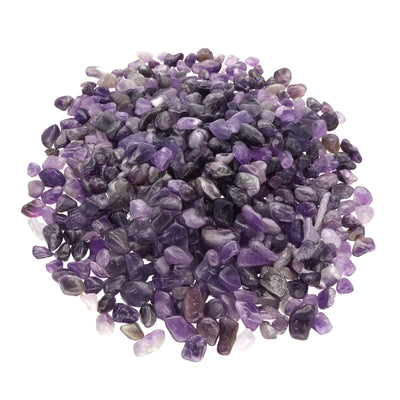
A particularly popular application is Amethyst gemstone water: for this, you place cleaned Amethyst water stones in a glass carafe with still water and let them sit for at least one hour. The water gains a pleasantly gentle energy without changing its taste. Amethyst water stones in tested quality ↗

Amethyst and the brow & crown chakra
In chakra teachings, Amethyst is primarily assigned to the brow chakra (Ajna, Third Eye) and the crown chakra (Sahasrara) — the two highest energy centers, which stand for intuition, awareness, insight, and spiritual opening. The violet color itself is considered in color symbolism to be the frequency of the spiritual and of transformation.
In practice, Amethyst is often placed during meditations — on the forehead (between the eyebrows) or above the crown of the head. It is said to help calm mental vibrations and make deeper levels of consciousness accessible.
Amethyst & the 7 main chakras
Amethyst is the stone of the two upper chakras — brow chakra (intuition, Third Eye) and crown chakra (awareness, spiritual transformation).
Amethyst and the zodiac signs
Astrologically, Amethyst is one of the most versatile stones — it is assigned to several zodiac signs. It is the main stone for Pisces: their sensitive, intuitive nature is said to receive protection and clarity through Amethyst. It is a secondary stone for Sagittarius (supports the search for truth), Aquarius (mental clarity), Capricorn (inner calm), and Taurus (moderation).
Regardless of zodiac sign, Amethyst also suits any phase of life in which transition, letting go, or spiritual searching are the theme — so: almost all of us.
Using Amethyst in everyday life
Here are the four most popular applications from our practice:
1. As a gemstone water stone
Amethyst is fully suitable for gemstone water. Place 2–3 cleaned water stones in a 1.5-liter carafe of still water and let it steep for at least 1 hour. The water remains clear and neutral in taste, but is said to absorb a gently calming energy. Classic: the premium base mix Amethyst + Rose Quartz + Rock Crystal ↗
2. On the bedside table or under the pillow
Probably the most traditional Amethyst application. A small Amethyst geode or tumbled stone next to the bed is said to drive away nightmares and promote deep sleep. Note: do not place very large geodes directly next to the head — their energy may initially be perceived as “too strong.”
3. In meditation
Hold an Amethyst in your left hand during meditation (the receiving side), or place it lying on the forehead between the eyebrows. The stone is said to help dissolve mental traces and make deeper contemplation easier. Especially powerful: meditation in or in front of a large Amethyst geode.
4. As jewelry on the body
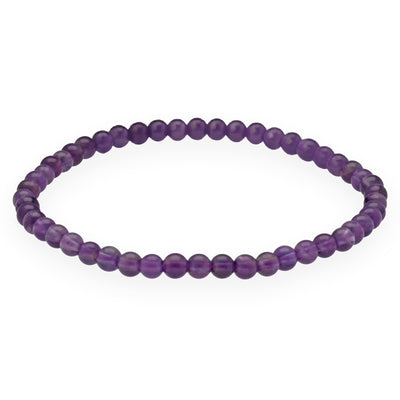
Amethyst necklaces, bracelets, and earrings are suitable for all-day wear — they calm without making you tired. Especially recommended during work stress, on the lunch break, or in the evening to wind down. Tip: wearing an Amethyst pendant near the heart is said to enhance the calming effect.
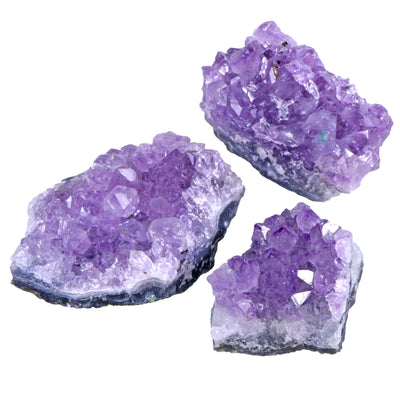
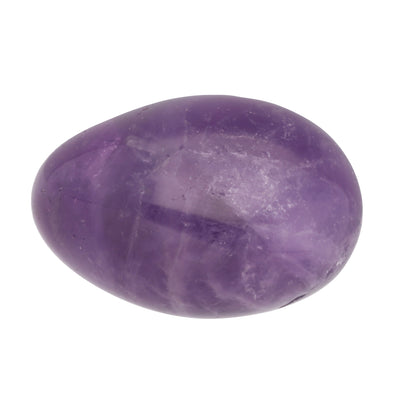
Amethyst bei Lebensquelle Plus
Echte Naturqualität — versandfertig aus Waldbröl, geprüfter Fachhandel.
Clean and recharge Amethyst — warning: NOT in the sun!
Amethyst is a highly receptive stone energetically — especially when worn or placed under the pillow, it absorbs energies. Regular cleansing is therefore essential.
Discharge (energetic cleansing)
- Under running, lukewarm tap water rinse for 1–2 minutes. Works perfectly with Amethyst.
- In a bowl with hematite tumbled stones discharge overnight — the classic, gentle method.
- Smudging with sage or Palo Santo — especially for large geodes that you do not want to put in water.
Recharge (add energy)
- ⚠️ UNDER NO CIRCUMSTANCES in direct sunlight! Amethyst fades permanently — deep violet turns into a pale gray. Just a few hours of midday sun can cause visible damage.
- Moonlight (full moon): The classic and ideal method for Amethyst.
- In an Amethyst geode: Smaller stones are recharged in or on a larger Amethyst cluster — they recharge themselves.
- Rock crystal cluster: Also works.
Please do not: use salt or salt water — it damages the polish. And again: NO SUN.
Clean & recharge Amethyst
Two steps, one ritual — first discharge (old energy out), then recharge (new energy in).
Discharge
Clear water — rinse under running, lukewarm tap water for 1–2 minutes. Amethyst is fully suitable for water.
Alternatives: smudging (sage/Palo Santo), or overnight on hematite tumbled stones.
Recharge
Moonlight — place it by the window on a full moon night. Or on an Amethyst geode / rock crystal cluster.
Unlike rock crystal: never in the sun — Amethyst fades permanently.
⚠️ Amethyst fades permanently in direct sunlight — use only moonlight for recharging.
Recognizing authenticity: Amethyst, heated Citrine, or colored glass?
There are two common “fakes” when it comes to Amethyst:
- Heated Amethyst → Citrine: If Amethyst is heated to 400–500 °C, the violet changes to golden yellow — and is sold as Citrine. 90% of all “Citrine” offered in trade are actually heated Amethysts. That is not a fake, but it is good to know.
- Colored glass: Very clear, flawless violet “Amethyst” spheres at bargain prices are often colored glass. Genuine Amethyst shows typical color zoning (from soft lilac to deep purple in the same stone) and microscopic inclusions.
- Synthetic Amethyst: Grown in a lab, chemically identical, but usually flawlessly clear and evenly colored. Natural stone always has slight irregularities.
At Lebensquelle Plus, all Amethysts come from natural deposits (especially Uruguay and Brazil). We do not sell synthetic stones. If you have questions about a specific piece, you can contact us anytime or visit our store in Nümbrecht.
Combining Amethyst with other stones
Amethyst combines beautifully with many other stones. The classic trios and duos:
- Amethyst + Rose Quartz + Rock Crystal — the famous “base mix” for water stones. Stands for clarity, love, and protection — probably the most popular combination in crystal healing.
- Amethyst + Citrine = Ametrine — natural intergrowth of both stones in one crystal (very rare, almost only from Bolivia). Said to combine calm and energy.
- Amethyst + Moonstone — especially for sleep problems, hormonal topics, dreams.
- Amethyst + Hematite — calming combined with grounding. Good when feeling spiritually “floaty.”
- Amethyst + Lapis Lazuli — enhances intuition, third eye, classic meditation combination.
Frequently asked questions about the effect of Amethyst
01 What effect does Amethyst have on the psyche? +
In crystal healing, Amethyst is said to relieve stress, racing thoughts, and sleep problems. It is said to promote inner peace, clarity, and good dreams, support letting go of old patterns and addictions, and be a classic companion in meditation and spiritual searching. These effects are not scientifically proven.
02 Can Amethyst go in the sun? +
No — absolutely not. Amethyst fades permanently in direct sunlight. Just a few hours of midday sun can turn the deep violet into a pale gray. For recharging, it is better to use moonlight (full moon) or an Amethyst geode.
03 Which chakra is Amethyst assigned to? +
Amethyst is primarily assigned to the brow chakra (Third Eye, Ajna) and the crown chakra (Sahasrara) — the two highest energy centers, which stand for intuition, awareness, and spiritual opening.
04 Which zodiac sign is Amethyst for? +
Amethyst is the main stone for Pisces and a secondary stone for Sagittarius, Aquarius, Capricorn, and Taurus. Due to its universal protective and calming effect, however, it suits every zodiac sign.
05 How do you clean Amethyst properly? +
Amethyst can be energetically discharged under running, lukewarm water. Moonlight or an Amethyst geode is suitable for recharging. Important: NEVER place it in direct sunlight — it will fade. Salt and salt water should also be avoided.
06 Does Amethyst help with sleep? +
Amethyst is traditionally placed under the pillow or on the bedside table to deepen sleep and drive away nightmares. Many users report falling asleep more peacefully — there is no scientific evidence for this.
07 Can I put Amethyst in drinking water? +
Yes, Amethyst is fully suitable for gemstone water. Place 2–3 cleaned water stones in a 1.5-liter carafe of still water and let it steep for at least 1 hour. The water does not absorb any measurable substances, but is said to carry a gently calming energy.
08 How can I tell if my Amethyst is real? +
Genuine Amethyst has color zoning (from soft lilac to deep purple in the same stone) and microscopic inclusions. Completely clear, flawless violet “Amethysts” at very low prices are often colored glass. Synthetic Amethyst is usually too evenly colored — natural stone always has slight irregularities.
09 Which stones go well with Amethyst? +
The classic is the base mix Amethyst + Rose Quartz + Rock Crystal (the water stones trio). Other popular combinations: Amethyst + Moonstone (for sleep), Amethyst + Hematite (calming + grounding), Amethyst + Lapis Lazuli (intuition).
10 Does Amethyst help against headaches? +
Traditionally, Amethyst is placed on the forehead or temples for tension headaches and migraines. Hildegard of Bingen already recommended Amethyst compresses. This effect is not scientifically proven — if you have frequent headaches, please have them checked by a doctor.
Conclusion: Why Amethyst should not be missing from any gemstone household
Amethyst is the universal calming and protective stone. If you are just starting with crystal healing, you should choose it as your second stone after rock crystal — it is affordable, versatile, and traditionally works exactly where many modern people need support: with stress, sleep problems, and mental overstimulation. Whether as a water stone, sleep companion, jewelry, or as a geode in the living space — Amethyst is a timeless classic.
In our Amethyst range ↗ you’ll find rough stones, tumbled stones, water stones, jewelry, and geodes in tested natural quality — ready to ship from Waldbröl or directly on site in our store in Nümbrecht.
Important note: The effects described here come from traditional crystal healing and are not scientifically proven. They do not replace medical diagnosis or treatment. If you have health complaints, please consult a doctor.
Further gemstone guides
- Rock Crystal effect — meaning, use & cleansing
- Rose Quartz effect — meaning, use & cleansing (coming soon)
- View all Amethyst products
- Complete gemstone lexicon A–Z
