



Snowflake Obsidian is black volcanic glass speckled with gray-white flakes — as if someone had scattered snow over solidified lava. No two pieces are alike. Mineralogically, it is not a separate mineral species, but a variety of obsidian. It is said to promote inner calm and grounding and to sharpen the eye for recurring patterns. In crystal healing, it is therefore often used during periods of change, conscious pauses, and sober decision-making. Here you’ll learn how to use it, what it can tolerate in water and sunlight, and how to protect it from glass breakage — curated by a specialist retailer.
Snowflake Obsidian — quick facts at a glance
| Mineral class | Volcanic rock glass, mineraloid |
| Color | Black to dark gray with gray-white flakes |
| Hardness (Mohs) | 5–5.5 |
| Crystal system | Amorphous; flakes from radial crystal aggregates |
| Chakra | Root chakra, additionally third eye chakra |
| Zodiac sign | Capricorn, additionally Scorpio |
| Element | Earth and Fire |
| Special feature | Natural volcanic glass with cristobalite spherulites |
| Suitable for gemstone water | Yes, if untreated and undamaged |
| Sunlight | Safe |
| Main sources | USA (especially Utah) and Mexico |
What is Snowflake Obsidian? Mineralogy and origin
Snowflake Obsidian is silica-rich volcanic natural glass and therefore has no fixed chemical formula. It forms when silica-rich lava cools so quickly that no continuous crystal lattice can develop. Its Mohs hardness is 5–5.5.
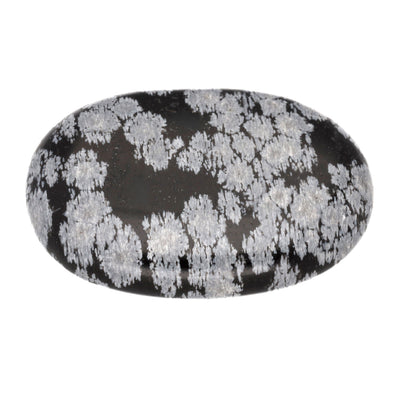
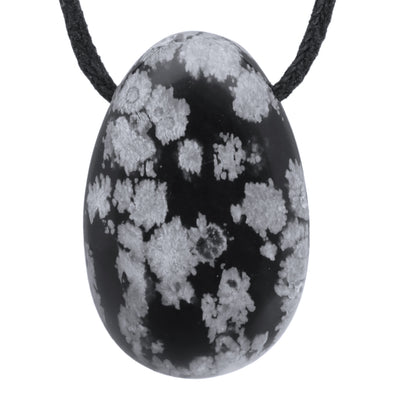
Within the black to dark gray glass mass are gray-white, radially structured spherulites, mostly made of cristobalite. They formed naturally and resemble snowflakes. This light pattern distinguishes it at first glance from the usually uniformly dark obsidian.
Despite its everyday usability, it remains a brittle glass that breaks conchoidally when struck. Water and sunlight are harmless — only hard impacts should be avoided. The best-known deposits are in the USA, especially Utah, and in Mexico.
Meaning & history
Its name combines the term obsidian with its unmistakable pattern. Of course, the flakes have nothing to do with snow: they form through crystallization in the cooled volcanic glass.
Obsidian was already used in prehistoric times to make blades, tools, and jewelry because of its razor-sharp fracture edges. Which variety was used can often no longer be distinguished historically — what mattered was the source, workability, and appearance.
In modern crystal healing, Snowflake Obsidian is considered the balancing variety of black obsidian. While dark obsidian is more often associated with firm boundaries, the snowflake variety is said to support calm, acceptance, and a sober view of contrasts.
Purported effect of Snowflake Obsidian on the psyche
Many people turn to Snowflake Obsidian when they are looking for a calm, grounding companion for everyday life. In crystal healing, it is said to have the following effects:
- Calm & balance: It is said to help restore balance between activity and withdrawal.
- Recognizing patterns: Its high-contrast pattern is said to sharpen awareness of recurring thought and behavior patterns.
- Inner stability: In changing phases of life, it is said to provide grounding and steadiness.
- Clear decisions: It is said to help view situations from a distance and make considered decisions.
- Courage for change: It is said to make necessary changes easier to approach with composure.
- Acceptance & patience: It is said to remind us to accept contrasts and allow developments time.
Snowflake Obsidian is a good fit if you want to stay calm during periods of change, question old habits, or consciously ground yourself in everyday life.
Purported effect of Snowflake Obsidian on the body
In traditional crystal healing, the following physical effects are attributed to Snowflake Obsidian — these statements come from traditional descriptions and are not a substitute for medical diagnosis or treatment.
- Sleep & rest: Traditionally, it is used as a calm companion for relaxing evening rituals.
- Well-being: In crystal healing, its grounding character is said to support general well-being.
- Tension: Tradition says it is used to accompany conscious breaks and encourage inner release.
- Body awareness: Traditionally, a tumbled stone in the hand is said to promote mindful awareness of one’s own body.
- Regeneration: During periods of rest, it is seen as a symbolic companion for withdrawal and renewed strength.
- Everyday balance: In folk healing, it is said to have a balancing influence between strain and recovery.
Untreated, undamaged Snowflake Obsidian is suitable for gemstone water. Rinse it thoroughly beforehand and use only smooth pieces without sharp fracture edges — tumbled stones are ideal. You can find suitable forms in the Snowflake Obsidian range.

Snowflake Obsidian and the chakras
Snowflake Obsidian is primarily associated with the root chakra. In traditional chakra teaching, it stands for security, grounding, stability, and connection to everyday life.
Hold the stone in your hand during a quiet meditation or place it beside you. Its black-and-white pattern is said to remind us not to judge contrasts too quickly, but to see them as parts of a whole.
It is additionally linked to the third eye chakra, as it is said to support clarity and pattern recognition. Its main association, however, remains the root chakra.
Snowflake Obsidian & the 7 main chakras
Its dark base color connects Snowflake Obsidian with the root chakra and conscious grounding.
Snowflake Obsidian and the zodiac signs
Capricorn is considered its main sign. The themes attributed to the stone — endurance, practicality, groundedness — reflect the traditional symbolism of this earth sign.
Scorpio is named as a secondary sign, associated with depth, transformation, and uncovering hidden patterns. But Snowflake Obsidian suits anyone who wants to view change calmly and find firm footing in everyday life.
Using Snowflake Obsidian in everyday life
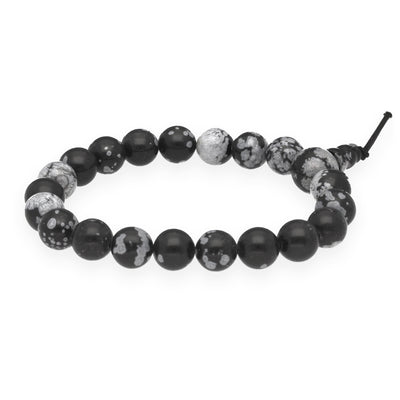
1. As a bracelet — for everyday wear
Worn on the wrist, it stays close to you and reminds you again and again of calm and grounding. Protect the bracelet from hard impacts.
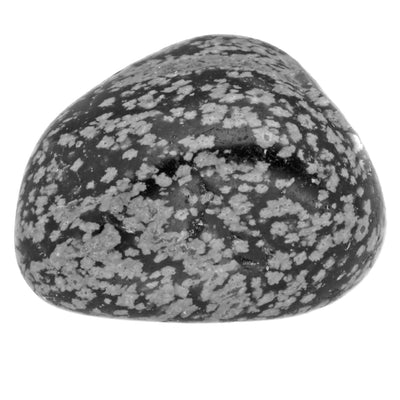
2. As a tumbled stone — in your pocket
When you’re on the go, you can consciously hold it in your hand when things get hectic. Store it separately from keys and harder stones.
3. During meditation — hold it mindfully
Hold it loosely in one hand and focus your attention on a current issue. Its flakes serve as a symbol of contrasts and recurring patterns.
4. In a room — place it where it is visible
A spot on your desk or in your reading corner keeps it in view. A stable base protects the volcanic glass from falling.
5. As a ritual stone — in the evening
Use it for a brief review of the day and ask yourself which patterns became visible today. Afterward, it may recharge in moonlight overnight.
Snowflake Obsidian at Lebensquelle Plus
Genuine natural quality — ready to ship from Waldbröl, a trusted specialist shop.
Cleaning and charging Snowflake Obsidian
Clean & charge Snowflake Obsidian
Snowflake Obsidian tolerates water and sun — only impacts are hard on the brittle glass.
Discharge
Rinse it regularly under running water and dry it with a soft cloth. It’s best to avoid hard brushes and sudden temperature changes.
Alternatively, place it on hematite tumbled stones.
Charge
Place it in moonlight for a few hours or overnight. Sunlight is also safe.
Alternatively, charge it on hematite.
⚠️ With a Mohs hardness of 5–5.5, Snowflake Obsidian is suitable for everyday use, but as natural glass it is impact-sensitive: knocks and drops can cause conchoidal fractures with sharp edges. Water and sunlight are harmless.
Recognizing authenticity
Genuine Snowflake Obsidian shows a natural, irregular interplay of dark volcanic glass and light crystal flakes.
- Color: The base mass is black to dark gray — never pure white or brightly colored.
- Pattern: The gray-white flakes vary in size, shape, and distribution; exactly identical patterns are a warning sign.
- Luster: Polished surfaces have a glassy shine, while rough surfaces appear more matte.
- Fracture: Breaks are conchoidal and often sharp-edged — typical of glass.
- Feel: The stone feels cool at first and is evenly smooth when well polished.
Look for irregular flake patterns and clean workmanship without sharp edges. At Lebensquelle Plus, you get tested natural quality from our gemstone specialist shop.
Combining Snowflake Obsidian with other stones
- Snowflake Obsidian + Hematite — A duo traditionally associated with grounding, stability, and a clearly structured everyday life.
- Snowflake Obsidian + Smoky Quartz — Both are said to provide calm, down-to-earth support during demanding phases of life.
- Snowflake Obsidian + Amethyst — This combination is said to connect grounding with inner calm and conscious reflection.
- Snowflake Obsidian + Rose Quartz — Here, factual clarity is said to meet a gentle, understanding attitude.
- Snowflake Obsidian + Black Tourmaline — Together, these dark stones are considered powerful companions for boundaries and grounding.
Frequently asked questions about the effect of Snowflake Obsidian
01 What does Snowflake Obsidian do? +
In crystal healing, Snowflake Obsidian is associated with calm, grounding, and recognizing recurring patterns. It is said to support factual decisions and a relaxed approach to change. These attributions do not replace professional advice.
02 Can Snowflake Obsidian go in water? +
Yes. Untreated, undamaged Snowflake Obsidian may be cleaned under running water and is also suitable for gemstone water. Use only clean, smooth pieces without sharp fracture edges.
03 How do I care for Snowflake Obsidian properly? +
Clean it under running water and charge it in moonlight or on hematite. Sunlight is safe, but you should avoid impacts because of the risk of glass breakage. You can find more information under Cleaning and charging gemstones.
04 Which zodiac sign is Snowflake Obsidian for? +
It is mainly associated with Capricorn, and additionally with Scorpio. Regardless of that, anyone who wants more calm and grounding can use it.
05 Which stones go well with Snowflake Obsidian? +
Proven partners are Hematite, Smoky Quartz, Amethyst, Rose Quartz, and Black Tourmaline. Choose the combination according to your personal theme and start with just a few stones.
06 What is the difference between Snowflake Obsidian and black obsidian? +
Snowflake Obsidian contains gray-white cristobalite flakes in dark glass, while black obsidian is usually uniformly colored. In crystal healing, the snowflake variety is more strongly associated with balance and pattern recognition. More in the guide Obsidian and its effect.
07 How do the white snowflakes form in obsidian? +
The flakes form when the originally amorphous volcanic glass crystallizes in places. This creates radially structured spherulites, mostly made of cristobalite. That’s why every pattern is naturally formed and unique.
08 Can Snowflake Obsidian go in the sun? +
Yes, sunlight is safe for Snowflake Obsidian. However, moonlight is traditionally preferred for charging. Always place it securely so it cannot fall.
Conclusion
Snowflake Obsidian combines black volcanic glass with distinctive light crystal flakes. In crystal healing, it is considered a stone of inner balance, to which calm, grounding, and a clear view of recurring patterns are attributed. It tolerates water and sunlight without issue — only protect the brittle natural glass from impacts.
Discover our Snowflake Obsidian range ↗ with hand-selected natural stones — ready to ship from Waldbröl or directly on site in our store in Nümbrecht.
Important note: The effects described here come from traditional crystal healing and are not scientifically proven. They do not replace medical diagnosis or treatment. If you have health concerns, please consult a doctor.
Further gemstone guides
- Rock Crystal effect — meaning, use & cleansing
- Amethyst effect — meaning, use & cleansing
- Cleaning and charging gemstones — the easy way
- Obsidian effect: meaning, use & cleansing
- Hematite effect: meaning, use & cleansing
- View all Snowflake Obsidian products
