



Apatite shines especially as blue apatite in an intense neon turquoise blue. In crystal healing, it is considered the stone of motivation, clarity, and self-expression — a drive for goals, ideas, and honest words. In this guide, you’ll find everything about the supposed effects of apatite, its meaning, uses, proper care, and an authenticity check — compiled by a specialist retailer.
Apatite — quick facts at a glance
| Mineral class | Phosphate — calcium phosphate |
| Color | neon blue, blue-green, green, yellow (most popular: blue) |
| Hardness (Mohs) | 5 — relatively soft & delicate |
| Crystal system | hexagonal, often prismatic crystals |
| Chakra | throat chakra & third eye chakra |
| Zodiac sign | Gemini (main), Libra, Taurus |
| Element | Air / Water |
| Special feature | chemically related to the mineral in our teeth & bones |
| Suitable for gemstone water | Not recommended — relatively soft |
| Sunlight | Protect from prolonged sun — color may fade |
| Main sources | Brazil, Madagascar, Mexico, Myanmar |
What is apatite? Mineralogy and origin
Apatite is a calcium phosphate — and thus chemically closely related to the mineral that makes up our teeth and bones (hydroxyapatite). Its name comes from the Greek apatáo (“I deceive”), because apatite was often mistaken for other minerals in the past due to its variety of colors.
The most popular is blue apatite with its intense neon turquoise blue; there are also green, yellow, and colorless varieties. With a Mohs hardness of 5, apatite is relatively soft and delicate — in fact, it serves as the reference mineral for hardness 5 on the Mohs scale.
Apatite grows in beautiful hexagonal, prismatic crystals. Important sources for the sought-after blue specimens are found in Brazil, Madagascar, and Mexico; deep blue apatites are sometimes heated to intensify the color.
Meaning & history
Apatite was only recognized and named as a distinct mineral in 1786 — fitting its “deceptive” nature, since it had previously been constantly confused with beryl, tourmaline, or other stones. For a long time, it was mainly important as a raw material for phosphate fertilizer.
As a gemstone and healing stone, the bright blue apatite only became popular more recently. In modern crystal healing, it is considered the stone of motivation and self-expression — a drive that helps you tackle goals and speak your truth.
Because of its relationship to bone mineral, apatite has traditionally been symbolically associated with bones, teeth, and the body’s structure — a traditional attribution, not medical proof of effect.
Supposed effect of apatite on the psyche
When someone asks us for a stone for more motivation, against listlessness, or for clear self-expression, blue apatite is a lovely recommendation. In crystal healing, the following effects are attributed to it:
- Motivation & drive: The classic — apatite is said to energize, motivate, and help you tackle goals with determination.
- Self-expression & communication: As a throat chakra stone, it is associated with honest, clear self-expression and the power to show yourself.
- Clarity & focus: Said to clear the mind, organize ideas, and support the achievement of goals.
- Inspiration & ideas: Associated with creativity, inspiration, and a “fresh perspective.”
- Self-confidence: Said to help you live your own wishes and talents with confidence.
- Overcoming inertia: Traditionally used to get out of lethargy and stuck patterns.
Apatite is therefore especially suitable for phases in which motivation, drive, clear self-expression, or new inspiration are the focus — and for people who want to pursue their goals or stand up for themselves more boldly.
Supposed effect of apatite on the body
In traditional crystal healing, apatite is attributed the following physical effects — these statements come from traditional descriptions and are not a substitute for medical diagnosis or treatment.
- Bones & teeth: Due to its chemical relationship to bone mineral, traditionally assigned to bone and tooth formation.
- Metabolism & appetite: In folk healing, associated with regulating appetite and metabolism.
- Cartilage & joints: Traditionally attributed to cartilage formation and mobility.
- Energy & vitality: Associated with drive, energy, and overcoming exhaustion.
- Throat & voice: As a throat chakra stone, assigned to the throat and voice area.
- General activation: Considered an invigorating, motivating companion.
Apatite is not recommended for gemstone water — it is relatively soft (hardness 5) and delicate. Instead, wear it as a pendant or tumbled stone close to you, where its motivating effect is most appreciated in crystal healing.

Apatite and the chakras
In chakra teachings, apatite is mainly assigned to the throat chakra (Vishuddha) and the third eye chakra (Ajna) — a connection of honest self-expression and a clear mind. Its bright blue color fits the throat chakra perfectly.
In practice, apatite is placed on the throat or forehead during meditation or worn as a necklace. It is said to help speak your truth, organize ideas clearly, and get motivated into action.
Green apatite is sometimes assigned to the heart chakra, while the popular blue apatite is clearly associated with the throat and forehead area — as a stone of communication and inspiration.
Apatite & the 7 main chakras
Apatite connects the throat and third eye chakras — it is said to promote clear self-expression, fresh ideas, and motivated drive.
Apatite and the zodiac signs
Astrologically, apatite is mainly assigned to Gemini (communication, ideas). It is said to help Gemini organize its many thoughts and turn them into motivated action.
As a secondary stone, it is suitable for Libra (expression, balance) and Taurus (drive toward goals). As a stone of motivation and self-expression, apatite suits anyone who wants to tackle their goals and stand up for themselves more clearly.
Using apatite in everyday life
1. As a necklace at the throat — for self-expression
A blue apatite worn at throat level is the classic use. It is said to help you speak your truth clearly and confidently.
2. On the desk — for motivation
An apatite while working on goals or projects is said to energize and direct focus to what matters most.
3. In meditation — for clarity & inspiration
Placed on the throat or forehead, apatite is said to clear the mind and spark new ideas.
4. In times of listlessness — as an activator
Worn consciously during sluggish, unmotivated phases to help you come out of a low point and get into action.
5. For resolutions & goals — as a companion
A lovely companion when starting new projects — said to promote motivation and perseverance.
Apatite bei Lebensquelle Plus
Echte Naturqualität — versandfertig aus Waldbröl, geprüfter Fachhandel.


Cleaning and charging apatite
Cleaning & charging apatite
Apatite is relatively soft and delicate — it needs gentle care.
Clean
Clean only briefly with lukewarm water and a soft cloth. No ultrasonic cleaning, no steam cleaning, no acids. Then dry it.
Gentle alternative: brief smudging instead of bathing.
Charge
Charge it in moonlight or on an amethyst cluster — both are gentle for this delicate stone.
Alternative: leave it overnight on a clear quartz cluster.
⚠️ Relatively soft (hardness 5)! No ultrasonic cleaning, no steam, no acids. Protect from prolonged sun (color fades, especially in blue specimens) and from impacts. Not recommended for gemstone water.
Recognizing authenticity
Because of its bright color, apatite is often mistaken for dyed glass or other blue stones. These features help:
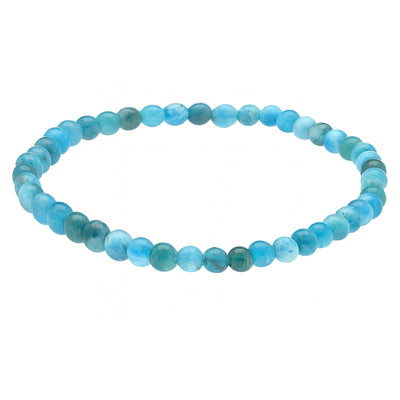
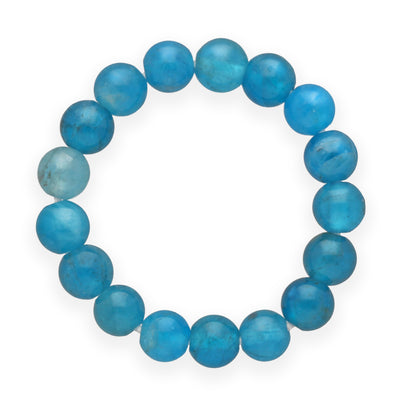
- Color: blue apatite has a typical, bright neon turquoise blue — often with fine streaks or zones, not completely uniform.
- Hardness: with hardness 5, apatite is relatively soft and can be scratched by quartz, for example — a very hard, glass-clear “apatite” is suspicious.
- Inclusions: natural apatites often show fine inclusions or slight cloudiness; flawlessly clear, vivid material suggests glass or synthesis.
- Confusion: blue apatite resembles Paraiba tourmaline or blue topaz — but these are significantly harder and more expensive.
- Air bubbles: round bubbles inside indicate glass, not genuine apatite.
Genuine blue apatite glows neon turquoise blue, is relatively soft, and shows natural zoning. At Lebensquelle Plus, apatite comes in verified natural quality — not dyed glass.
Combining apatite with other stones
- Apatite + Citrine — motivation meets drive & abundance — a strong “goal combo.”
- Apatite + Sodalite — both for clarity and self-expression — a clear mind with an honest voice.
- Apatite + Clear Quartz — Clear Quartz amplifies the motivating, clarifying effect.
- Apatite + Aquamarine — double throat chakra power for clear, courageous communication.
- Apatite + Tiger’s Eye — motivation plus courage & perseverance — great for tackling goals.
Frequently asked questions about the effects of apatite
01 What does apatite do? +
In crystal healing, apatite is considered a stone of motivation, clarity, and self-expression. It is said to energize and motivate, help with honest self-expression (throat chakra), clear the mind, and promote inspiration and the achievement of goals.
02 What is blue apatite? +
Blue apatite is the most popular variety of apatite — with an intense neon turquoise blue. Apatite also comes in green, yellow, and colorless, but the bright blue one is considered the classic stone for motivation, communication, and self-expression.
03 Is it true that apatite suppresses appetite? +
This is a traditional attribution from folk healing — the name just happens to sound similar to “appetite.” There is no scientific proof of this. Apatite is not a weight-loss aid and does not replace a balanced diet or medical advice.
04 Can apatite go in water? +
Only very briefly for cleaning with lukewarm water. Apatite is relatively soft (hardness 5) and delicate, so it is not recommended for gemstone water. No ultrasonic cleaning, no steam cleaning, no acids — and protect it from prolonged sun, as the color may fade.
05 How do I care for apatite properly? +
Cleaning: only briefly with lukewarm water and a soft cloth, or smudge it — no ultrasonic cleaning, no steam, no acids. Charging: in moonlight or on an amethyst cluster. Protect from prolonged sun (color) and impacts. Full guide: Cleaning and charging gemstones.
06 Which zodiac sign is apatite for? +
Apatite is mainly assigned to Gemini, with Libra and Taurus as secondary stones. As a stone of motivation and self-expression, it suits anyone who wants to tackle their goals or stand up for themselves more boldly.
07 Which stones go well with apatite? +
Classic combinations: Apatite + Citrine (motivation & drive), Apatite + Sodalite (clarity & expression), Apatite + Clear Quartz (amplification), Apatite + Tiger’s Eye (courage & perseverance).
08 Is apatite suitable as a gift? +
Very much so — apatite is a motivating gift for people who are pursuing a goal, starting something new, or want to stand up for themselves more. Its bright neon blue also makes it a striking, modern gemstone.
Conclusion
Apatite — the bright blue stone of motivation. Chemically related to our bone mineral, in crystal healing it is a drive for goals, clear self-expression, and fresh ideas. Anyone who wants to overcome inertia, speak their truth, or tackle a project will find a motivating companion in blue apatite.
In our apatite range ↗, you’ll find tumbled stones, pendants, and rough pieces in genuine natural quality — ready to ship from Waldbröl or available directly on site in our store in Nümbrecht.
Important note: The effects described here come from traditional crystal healing and are not scientifically proven. They do not replace medical diagnosis or treatment. If you have health concerns, please consult a doctor.
Further gemstone guides
- Clear Quartz effect — meaning, use & cleansing
- Amethyst effect — meaning, use & cleansing
- Cleaning and charging gemstones — the easy way
- Sodalite effect — clarity of mind
- Citrine effect — sun stone for abundance
- View all apatite products