



The Black Tourmaline — mineralogically schorl — is the ultimate protection stone. Deep black, often with fine longitudinal striations, described in crystal healing for centuries as a “shield” against negative energies. Miners wore it in the 16th century, esoteric practitioners today. In this guide, you’ll find everything about the supposed effects of Black Tourmaline on the mind, body, and chakras, plus application, care, and the most common questions from our store in Nümbrecht.
Black Tourmaline — quick facts at a glance
| Mineral class | Silicate / tourmaline group (schorl — iron-bearing variety) |
| Color | deep black, often with fine longitudinal striations along the crystal axis |
| Hardness (Mohs) | 7 to 7.5 out of 10 |
| Crystal system | trigonal, typically long prismatic crystals |
| Chakra | Root chakra (Muladhara) |
| Zodiac sign | Capricorn (main), Taurus, Scorpio |
| Element | Earth |
| Special feature | pyroelectric & piezoelectric — becomes electrically charged under pressure or heat |
| Suitable for gemstone water | ⚠️ Not recommended — iron-bearing, may oxidize |
| Sunlight | Tolerates sun, does not fade — very lightfast |
| Main sources | Brazil (Minas Gerais), Madagascar, USA (Maine, California), Sri Lanka, Pakistan, Namibia |
What is Black Tourmaline? Mineralogy and origin
Black Tourmaline belongs to the tourmaline group — a mineralogically very versatile family of borosilicates that occurs in practically every color. The black variety is mineralogically called schorl and owes its deep color to a high iron content. Schorl is by far the most common type of tourmaline — over 95% of all tourmalines found worldwide are black.
The most striking feature is the parallel longitudinal striations along the crystal axis — a clear sign of authenticity that you will never find in glass imitations. Schorl crystals typically grow as slender, column-like rods with a triangular cross-section, often embedded in granite or pegmatite in a radiating pattern.
A mineralogical curiosity: tourmaline is both pyroelectric (becomes electrically charged when heated) and piezoelectric (under pressure) — Dutch people used this in the 18th century to pull tobacco ash out of pipes with heated tourmaline crystals. Hence the old Dutch name “Aschentrekker” (ash puller). With a Mohs hardness of 7–7.5, schorl is extremely durable and excellent for everyday jewelry use.
Main sources are Brazil (especially Minas Gerais), Madagascar, the USA (Maine, California), Sri Lanka, Pakistan, and Namibia.
Meaning & history
The name schorl is German and comes from 16th-century Saxon mining — the word “Schorl” originally referred to “worthless gangue rock” found during tin mining in the Ore Mountains. Only later was schorl recognized as a distinct mineral. The place name “Schorlau” near Aue is still a reminder of these early finds today.
In European mining tradition, Black Tourmaline was considered a protective stone for miners — it was meant to guard against invisible dangers deep underground. In Indian Vedic astrology too, black tourmaline has long been described as a stone of grounding and protection against “negative vibrations.”
In modern crystal healing, Black Tourmaline is now the protection stone — no other stone is recommended so consistently for “protection from negative energies,” aura cleansing, and “shielding against electromagnetic smog.” Even though the latter effect has not been scientifically proven, its popularity remains unbroken: schorl is one of the best-selling protection stones worldwide.
Supposed effect of Black Tourmaline on the psyche
When someone asks us for a stone against “bad energies,” a difficult colleague, or simply for a feeling of “energetic ground beneath your feet,” Black Tourmaline is almost always the first recommendation. In crystal healing, it is said to have the following effects:
- Protection from negative energies: The classic — schorl is considered the most important protection stone in modern crystal healing. It is said to deflect negative vibrations before they burden one’s own system.
- Boundaries & aura cleansing: Traditionally recommended for clear energetic boundaries — especially for sensitive people who quickly absorb the moods of others.
- Grounding & stability: As a classic root chakra stone, schorl is said to convey a feeling of safety, groundedness, and “being here.”
- Mental clarity & letting go: It is said to help dissolve circling thoughts, worries, and destructive rumination — a “mental spring cleaning.”
- Courage & inner strength: Associated with strengthened self-confidence, a clear stance, and steadiness — even in conflict situations.
- Protection against electromagnetic smog: A very popular, traditional esoteric use: schorl at the workplace, on the router, by the bed. Note: There is no scientific evidence that stones influence electromagnetic fields.
Black Tourmaline is therefore especially suitable for phases in which boundaries, protection, grounding, or mental clarity are important — and for people who often feel “absorbing,” overstimulated, or energetically burdened.
Supposed effect of Black Tourmaline on the body
In traditional crystal healing, the following physical effects are attributed to Black Tourmaline — these claims come from transmitted descriptions and are not a substitute for medical diagnosis or treatment.
- Nervous system & stress reduction: Traditionally described as having a calming, stabilizing effect on the autonomic nervous system.
- Sleep & nightmares: Classically placed under the pillow or next to the bed — said to promote calmer sleep and keep “dark dreams” away.
- Pain relief: In folk healing, placed on tension, back pain, and joint pain.
- Immune system: Associated with a strengthening effect on the body’s defenses.
- Detoxification: Said to provide energetic relief and draw “stale” energy out of the body.
- Circulation: Traditionally also used to support blood flow and circulation regulation.
Black Tourmaline is not suitable for gemstone water — due to its high iron content, it can oxidize and affect the water. Better wear it as jewelry, or use it as a tumbled stone or rough crystal in the room.

Black Tourmaline and the chakras
In chakra teachings, Black Tourmaline is clearly assigned to the root chakra (Muladhara) — the lowest energy center at the tailbone, which stands for safety, trust, grounding, and “arriving in the body.” The deep black color further enhances this grounding quality.
In practice, schorl is placed on the tailbone during meditation or between the feet — to direct energy downward and create a feeling of roots and stability. It is also recommended to wear it on the body (necklace, pendant) — as an “all-day shield.”
Some sources additionally assign schorl to the earth star chakra — an energy point below the feet that connects us to the earth.
Black Tourmaline & the 7 main chakras
Black Tourmaline is the classic root chakra stone — it is said to stabilize the foundation energy center and provide grounding, safety, and downward protection.
Black Tourmaline and the zodiac signs
Astrologically, Black Tourmaline is the main stone for Capricorn — the earthy, structured Saturn sign. It is said to help Capricorn deepen its natural groundedness while also protecting against overwork & mental pressure.
As a secondary stone, it is for Taurus (grounding, security) and Scorpio (protection from excessive emotions and energetic strain). As a universal protection and grounding stone, schorl suits every zodiac sign — especially sensitive, easily irritated, or “floaty” people.
Using Black Tourmaline in everyday life
1. As jewelry — the all-day shield
A Black Tourmaline pendant or bracelet is the most popular use. Durable (Mohs 7–7.5), uncomplicated, lightfast — perfect for daily wear. Especially recommended for people who deal with others a lot or often end up in unpleasant moods.
2. In the bedroom — against nightmares and restless sleep
A schorl tumbled stone under the pillow or a rough crystal on the nightstand is traditionally used for calm, protective sleep. Also helpful for children afraid of the dark.
3. At work & in the home — as room protection
Place a large Black Tourmaline on the desk or in the four corners of a room — it is said to cleanse and “shield” the room’s energy. Popular placement: next to routers, Wi-Fi stations, or the PC (note: no scientifically proven protection against electromagnetic smog).
4. In meditation — for grounding
Place schorl between your feet or hold it in both hands during meditation. It is said to quickly bring back a feeling of grounding, safety, and clarity, especially after “floaty” or stressful phases.
5. Before difficult situations — as a talisman
Put a small schorl tumbled stone in your pocket before a conflict conversation, an exam, or a meeting. It is said to stabilize energetically and make you feel more “untouchable.”
Tourmaline, black bei Lebensquelle Plus
Echte Naturqualität — versandfertig aus Waldbröl, geprüfter Fachhandel.
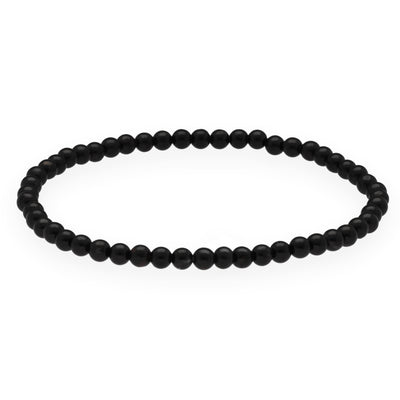
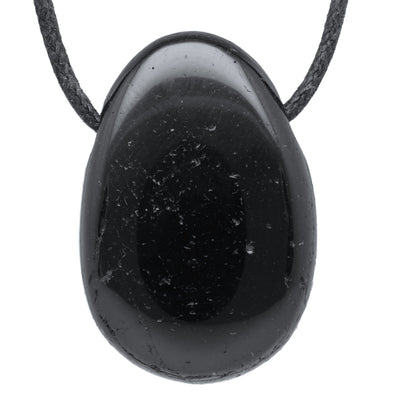
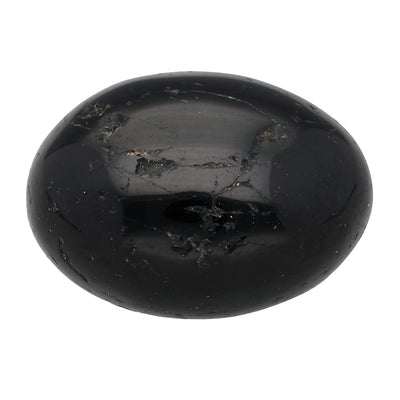
![[slot:MAIN] MAIN polished](http://solunaspring.com/cdn/shop/files/MAIN_polished_19198acf-3887-4faa-847c-817cb2ca6be0.jpg?v=1782898373&width=400)
Cleaning and charging Black Tourmaline
Clean & charge Black Tourmaline
Two steps, one ritual — Black Tourmaline is robust, but has a special feature because of its iron content.
Discharge
Smudging with sage, Palo Santo, or incense — the ideal method for iron-bearing schorl. Alternatively: briefly under running lukewarm water (do not soak, dry well).
Alternative: overnight on hematite tumbled stones — both grounding, both iron-bearing, a good symbiosis.
Charge
Amethyst geode — the most sustainable method. Schorl does not need to be energetically “charged” as it mainly works by drawing energy away, but the geode keeps it fresh permanently.
Alternative: sunlight — schorl is very lightfast and does not fade. Moonlight also works.
⚠️ No long water bath — the high iron content can oxidize. No salt (attacks the surface). If visible orange spots appear: that is rust, remove carefully with a soft cloth.
Recognizing authenticity
Black Tourmaline is relatively hard to fake — its typical appearance is very distinctive:
- Longitudinal striations are the main feature: genuine schorl shows fine parallel striations along the crystal axis. These are completely absent in glass imitations or pressed stones.
- Triangular cross-section: raw schorl grows in column-like crystals with a triangular or hexagonal cross-section — glass pieces are round or irregularly angular.
- Glass imitations (onyx glass): look too uniformly smooth, often with air bubbles inside. Genuine schorl has tiny inclusions and small irregularities.
- Confusion with shungite: Shungite is matte black, often with gray inclusions, and significantly lighter — schorl is glossy to silky and heavier.
- Colored tourmaline: different tourmaline varieties come in many colors (verdelite = green, rubellite = red, indicolite = blue) — all are real tourmalines, just different mineralogical varieties.
Genuine schorl is noticeably heavier than it looks, shines silky to greasy, and shows the typical striped structure. At Lebensquelle Plus, Black Tourmaline comes from verified natural quality (Brazil, Madagascar) — no imitations, no dyed materials.
Combining Black Tourmaline with other stones
- Black Tourmaline + Clear Quartz — Clear Quartz is said to amplify the protective effect — the absolute classic for protection sets.
- Black Tourmaline + Hematite — double grounding — both draw energy downward, ideal for people who often feel “floaty” or scattered.
- Black Tourmaline + Labradorite — schorl grounds, labradorite shields the aura — one of the most popular protection combinations for sensitive people.
- Black Tourmaline + Rose Quartz — protection + heart opening — said to create boundaries without becoming hard, an important balance.
- Black Tourmaline + Amethyst — grounding below, clarity above — a classic combination for meditation and a calm mind.
- Black Tourmaline + Obsidian — both intense protection stones — schorl as all-round protection, obsidian for deeper shadow work.
Frequently asked questions about the effects of Black Tourmaline
01 What does Black Tourmaline (schorl) do? +
In crystal healing, Black Tourmaline is considered the most important protection stone. It is said to keep negative energies away, provide energetic grounding, offer aura protection, and promote mental clarity. Especially recommended for sensitive people who quickly absorb the moods of others.
02 Who should wear Black Tourmaline? +
Especially recommended for: sensitive people who absorb other people’s moods; professionals in social work, therapy, or sales; people with restless sleep or nightmares; anyone who works a lot with electronic devices; and for phases when you feel “energetically drained.”
03 Does Black Tourmaline really protect against electromagnetic smog? +
This is the most commonly mentioned use, but it has not been scientifically proven: gemstones do not measurably influence electromagnetic fields. In crystal healing, the use is still traditionally recommended — if you want to try it, place a schorl near a router, PC, or smartphone. However, it is not a substitute for spatial or technical solutions as a health measure against actual EMF exposure.
04 How do I distinguish Black Tourmaline from shungite or onyx? +
Schorl has characteristic parallel longitudinal striations along the crystal axis — these are absent in shungite (matte gray-black, very light) and onyx (uniform black, often with white bands). Schorl is also significantly heavier than shungite and has a silky-greasy shine.
05 Can I put Black Tourmaline in water? +
Only very briefly and do not soak it. Schorl contains iron and can oxidize with prolonged contact with water — visible as orange rust spots. For cleaning, it is better to smudge it or briefly rinse it under running water and dry it well. It is not suitable for gemstone water.
06 How do I care for Black Tourmaline properly? +
Cleaning: smudging (sage, Palo Santo) or briefly under running water, dry well. Charging: on an amethyst geode, in moonlight, or briefly in the sun (schorl does not fade). Avoid: long water baths, contact with salt, impacts. Complete care guide: Clean and charge gemstones.
07 Can I place Black Tourmaline next to the bed at night? +
Yes — this is one of the classic uses. Traditionally recommended for calmer sleep and against nightmares. Position: under the pillow or on the nightstand. For particularly restless sleep, place a larger rough crystal at the foot of the bed.
08 Which stones go well with Black Tourmaline? +
Classic combinations: schorl + clear quartz (protection amplified), schorl + hematite (double grounding), schorl + labradorite (grounding + aura protection), schorl + rose quartz (protection + heart opening), schorl + amethyst (grounding + clarity).
09 Is schorl the same as Black Tourmaline? +
Yes — schorl is the mineralogical technical term for the black, iron-bearing variety of the tourmaline group. In the esoteric and gemstone trade, “Black Tourmaline” is the more common name. Both names refer to the same mineralogical material.
10 Is Black Tourmaline suitable as a gift? +
Very much so — schorl is robust, lightfast, easy to care for, and energetically a “neutral” stone in the positive sense: it provides protection and grounding without pushing in a specific direction. Suitable for almost anyone, especially sensitive, busy, or stressed people. Also a good choice for men who don’t have much use for “colorful” healing stones.
Conclusion
Black Tourmaline — the classic protection and grounding stone of modern crystal healing. Deep black, robust, lightfast, with centuries of application tradition. Anyone looking for an uncomplicated, powerful protection stone for everyday life will find a reliable companion in schorl — as jewelry, by the bed, at work, or in meditation.
In our Black Tourmaline range ↗ you’ll find tumbled stones, rough crystals, and jewelry made from genuine natural quality — ready to ship from Waldbröl or directly on site in our store in Nümbrecht.
Important note: The effects described here come from traditional crystal healing and have not been scientifically proven. They do not replace medical diagnosis or treatment. If you have health concerns, please consult a doctor.
Further gemstone guides
- Clear Quartz effect — meaning, use & cleansing
- Amethyst effect — meaning, use & cleansing
- Clean and charge gemstones — the easy way
- Obsidian effect — the second major protection stone
- Hematite effect — the grounding partner to schorl
- Labradorite effect — the aura protection stone
- View all Black Tourmaline products