


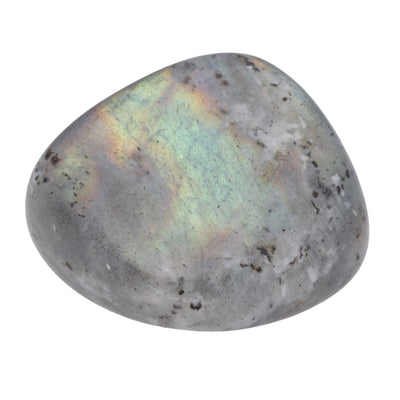
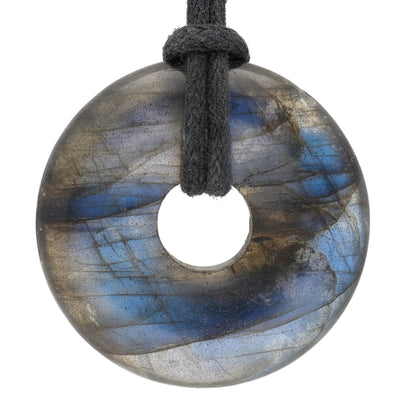
The labradorite is the magical stone of protection and intuition — at first glance an inconspicuous gray stone, yet at the right angle of light it flashes in deep blue, green, and gold. This mysterious shimmer is called labradorescence. In crystal healing, it is considered a shield for the aura and a stone of inner magic. In this guide, you’ll find everything about the attributed effects of labradorite on the psyche, body, and chakras, plus its uses, care, and the most common questions from our store in Nümbrecht.
Labradorite — quick facts at a glance
| Mineral class | Silicate / feldspar (plagioclase series) |
| Color | generally gray to black, with shimmering blue-green-gold (labradorescence) |
| Hardness (Mohs) | 6 to 6.5 out of 10 |
| Crystal system | triclinic |
| Chakra | Third eye chakra & throat chakra (all upper chakras) |
| Zodiac sign | Leo (main), Scorpio, Sagittarius |
| Element | Water / air |
| Suitable for gemstone water | ⚠️ Only briefly — feldspar, relatively sensitive |
| Sunlight | Possible, but moonlight is gentler |
| Main sources | Canada (Labrador — namesake), Madagascar, Finland, Russia |
What is labradorite? Mineralogy and origin
Labradorite is a feldspar mineral from the plagioclase series. Its spectacular shimmer — labradorescence — is created by a special internal lamellar structure: the finest alternating layers refract incoming light and reflect it back in metallic blue, green, gold, and sometimes even violet. Viewed from another angle, the same stone appears plain gray again.
It was discovered in 1770 on the Labrador Peninsula in Canada — hence the name. A particularly bright, almost transparent variety with colorful shimmer is called spectrolite and comes from Finland. White “rainbow moonstone” is also mineralogically a labradorite.
With a Mohs hardness of 6–6.5, labradorite is medium-hard — it should be handled with care and not stored together with harder stones.
Meaning & history
The Inuit of Labrador told that the northern lights were once trapped in the stones along the coast — a warrior freed them with his spear, but a remnant remained forever in labradorite. Hence its nickname, “frozen northern lights.”
Because labradorite was only discovered in 1770, it lacks the ancient history of other stones — but it has gained even greater significance in modern crystal healing. Today it is considered the most important protection stone for the aura and a stone for anyone working spiritually or energetically.
In crystal healing, labradorite is described as the “stone of magicians” — it is said to awaken hidden abilities while also protecting against energy loss.
Attributed effect of labradorite on the psyche
Labradorite is the stone we recommend when someone says: “I constantly absorb other people’s moods” or “I feel empty after being around people.” In crystal healing, the following effects are attributed to it:
- Aura protection & boundaries: Labradorite is said to act like a shield — keeping out foreign energies while stopping your own energy loss. The classic stone for “empaths.”
- Intuition & inner perception: Traditionally associated with strengthened intuition, psychic insight, and access to the subconscious.
- Protection for spiritual workers: Therapists, healers, and coaches traditionally wear it as energetic protection.
- Inner strength in transitions: Said to provide support during phases of change, uncertainty, and new beginnings.
- Dissolving illusions: Used to distinguish more clearly between one’s own perception and outside projections.
- Imagination & inspiration: Said to stimulate creativity, imagination, and “magical thinking.”
Labradorite is therefore especially suitable for phases in which boundaries, protection, intuition, or spiritual work are the focus — and for sensitive people who are easily “carried along” by their surroundings.
Attributed effect of labradorite on the body
In traditional crystal healing, the following physical effects are attributed to labradorite — these statements come from traditional descriptions and are not a substitute for medical diagnosis or treatment.
- Eyes & vision: Traditionally placed on the eyes for eye complaints and to strengthen vision.
- Colds & respiratory tract: Mentioned in folk healing for colds, bronchitis, and respiratory issues.
- Metabolism & hormonal system: Said to have a regulating effect on metabolism and glandular activity.
- Rheumatism & joints: Traditionally used for gout and rheumatic complaints.
- Blood pressure: Described as having a balancing effect on blood pressure.
Labradorite is only conditionally suitable for gemstone water — as a feldspar, it is more sensitive. If at all: only briefly and with cool water; the indirect method is better. Better wear it as jewelry. View labradorite jewelry and tumbled stones ↗

Labradorite and the chakras
In chakra teachings, labradorite is primarily assigned to the upper chakras — the third eye chakra (Ajna) for intuition and inner perception, as well as the throat chakra (Vishuddha) for clear expression of what one perceives. Some sources assign it to all upper chakras at once.
In practice, labradorite is placed on the forehead during meditation to strengthen intuition — or worn on the body to act as an “aura shield” throughout the day.
Labradorite & the 7 main chakras
Labradorite is a stone of the upper perception chakras — third eye chakra (intuition, psychic insight) and throat chakra (clear expression) — and is considered a shield for the entire aura.
Labradorite and the zodiac signs
Astrologically, labradorite is the main stone for Leo — it is said to help Leo protect its strong radiance and not “give it away.”
It is a secondary stone for Scorpio (depth, intuition) and Sagittarius (mental expansiveness). As a universal protection and intuition stone, however, labradorite suits every zodiac sign — especially sensitive, empathetic people.
Using labradorite in everyday life
1. As jewelry — daily aura protection
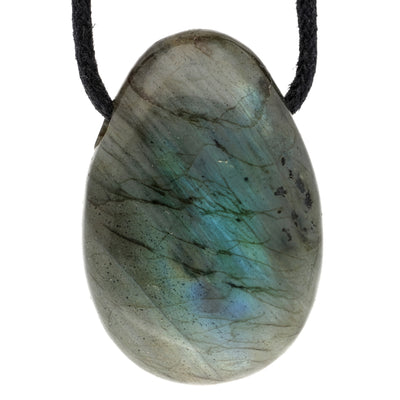
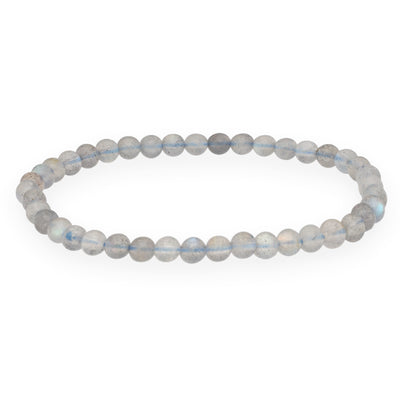
The most important use: wear a labradorite pendant, necklace, or bracelet all day. It is said to act as an energetic shield — especially recommended for people in helping or advisory professions.
2. In meditation — placed on the forehead
Place labradorite on the third eye chakra (between the eyebrows). It is said to strengthen intuition and make access to inner images and insights easier.
3. Before energetically demanding situations
Put a labradorite tumbled stone in your pocket before crowds, difficult encounters, or energetic work — as a “protection talisman.”
4. In the room — for a protected atmosphere
A labradorite in a therapy, treatment, or work room is said to keep the room’s energy “clear and protected.”
Labradorite bei Lebensquelle Plus
Echte Naturqualität — versandfertig aus Waldbröl, geprüfter Fachhandel.
Clean and recharge labradorite
Clean & recharge labradorite
Two steps, one ritual — with a little mindfulness for medium-hard labradorite (Mohs 6–6.5).
Discharge
Lukewarm water + soft cloth — the encyclopedia recommendation. Rinse briefly or wipe gently; do not soak for long (watch cleavage).
Alternatives: smudging (sage/Palo Santo) or overnight on hematite tumbled stones.
Recharge
Moonlight — place it by the window for a full moon night. Energetically perfect for the “northern lights stone.”
Alternative: on a clear quartz cluster. Sunlight is possible briefly, but moonlight is more fitting.
⚠️ No salt, no long water baths, no impacts — as a feldspar, labradorite is more sensitive than quartz (cleavage).
Recognizing authenticity
Labradorite is hard to fake — its shimmer is difficult to imitate. Still, there are mix-ups:
- Glass imitations: Artificial “shimmer glass” looks too colorful and uniformly iridescent. Genuine labradorite flashes only at certain angles — otherwise it is simply gray.
- Spectrolite: A genuine, especially high-quality labradorite variety from Finland with colorful shimmer — not a fake, but premium quality.
- Rainbow moonstone: Mineralogically also labradorite, just lighter and whiter — often sold separately.
Genuine labradorite shows its shimmer only depending on the angle — when you turn it, the glow suddenly switches on and off. At Lebensquelle Plus, labradorite comes from verified natural quality (Madagascar, Canada).
Combining labradorite with other stones
- Labradorite + clear quartz — clear quartz is said to amplify the protective and intuitive effect.
- Labradorite + amethyst — both for the upper chakras — a classic combination for intuition and meditation.
- Labradorite + hematite — protection above, grounding below — a good combination against the feeling of “floating away.”
- Labradorite + moonstone — both feldspars, both shimmering — a classic duo for intuition and feminine energy.
- Labradorite + black tourmaline — double protection — tourmaline grounds, labradorite shields the aura.
Frequently asked questions about the effects of labradorite
01 What effect does labradorite have on the psyche? +
In crystal healing, labradorite is said to protect the aura, strengthen boundaries, and promote intuition. It is considered a shield for sensitive people and a stone for anyone working spiritually or energetically. This is not scientifically proven.
02 Which chakra is labradorite assigned to? +
Labradorite is primarily assigned to the third eye chakra (intuition) and the throat chakra (clear expression) — and is considered a shield for the entire aura.
03 Which zodiac sign is labradorite for? +
Labradorite is the main stone for Leo and a secondary stone for Scorpio and Sagittarius. As a universal protection and intuition stone, however, it suits every zodiac sign, especially sensitive people.
04 What is labradorescence? +
Labradorescence is the characteristic, angle-dependent shimmer of labradorite in blue, green, and gold. It is caused by the finest internal lamellar layers that refract and reflect light.
05 How do you clean labradorite properly? +
Labradorite tolerates lukewarm water with a soft cloth (encyclopedia recommendation) or smudging. Recharge it in moonlight or on a clear quartz cluster — short periods of sunlight are okay. No salt, no long water baths, no impacts (cleavage).
06 Does labradorite really protect against foreign energies? +
In crystal healing, labradorite is considered the classic aura protection stone — it is said to keep out foreign energies and stop your own energy loss. This is not scientifically proven; however, many users in helping professions describe a feeling of boundary-setting that they experience as strengthening.
07 Can labradorite go in water? +
Yes, briefly. Lukewarm water for rinsing or gentle wiping is the encyclopedia recommendation. Longer water baths or gemstone water are not recommended — as a feldspar, labradorite is more sensitive.
08 What is the difference between labradorite and spectrolite? +
Spectrolite is a particularly high-quality labradorite variety from Finland with especially colorful, intense shimmer. Mineralogically it is the same mineral — spectrolite is basically the premium quality.
09 How can I tell if my labradorite is genuine? +
Genuine labradorite flashes only at certain angles — when you turn it, the glow suddenly switches on and off. Otherwise it is simply gray. Glass imitations look too colorful and uniformly iridescent throughout.
10 Which stones go well with labradorite? +
Labradorite harmonizes with clear quartz (amplification), amethyst (intuition), hematite (protection above + grounding below), moonstone (both feldspars), and black tourmaline (double protection).
Conclusion
Labradorite is the magical stone of protection and intuition — inconspicuous gray until the light makes it shine. Anyone who is easily “carried along” by their surroundings, works energetically, or wants to strengthen their intuition will find a reliable companion in labradorite. It works best as jewelry worn all day.
In our labradorite range ↗ you’ll find tumbled stones, jewelry, and special pieces with strong shimmer — ready to ship from Waldbröl or available directly on site in our store in Nümbrecht.
Important note: The effects described here come from traditional crystal healing and are not scientifically proven. They do not replace medical diagnosis or treatment. If you have health concerns, please consult a doctor.
Further gemstone guides
- Clear quartz effect — meaning, use & cleansing
- Amethyst effect — meaning, use & cleansing
- Clean and recharge gemstones — the easy way
- Moonstone effect — the related feldspar
- View all labradorite products
