



Kunzite is one of the most delicate stones of all: pale pink to soft lilac, translucent, with fine longitudinal striations and a quiet inner glow. In crystal healing, it is regarded as the stone of devotion and heart opening — the stone for anyone who controls too much and lets go too little. It does, however, have one characteristic you should know: Kunzite fades in sunlight. Why that is and how to care for it properly, read here.
Kunzite — quick facts at a glance
| Mineral class | Silicate — spodumene variety (LiAlSi₂O₆) |
| Color | soft pink to violet, rarely colorless — due to traces of manganese |
| Hardness (Mohs) | 6.5 to 7 — but perfect cleavage, therefore prone to breakage |
| Crystal system | monoclinic — prismatic with typical longitudinal striations |
| Chakra | Heart chakra (Anahata) & Crown chakra (Sahasrara) |
| Zodiac sign | Taurus (main), Scorpio, Leo |
| Element | Water |
| Other names | evening stone, pink spodumene |
| Suitable for gemstone water | Yes — prepare briefly and cool, do not place in the sun |
| Sunlight | No — fades with prolonged sun exposure |
| Main sources | Afghanistan, Brazil, Madagascar, Pakistan, USA (California) |
What is Kunzite? Mineralogy and origin
Kunzite is the pink to violet variety of the mineral spodumene (LiAlSi₂O₆) — a lithium aluminum silicate. Its delicate color is caused by traces of manganese. Its green relative from the same mineral family is called hiddenite.
It crystallizes in the monoclinic system and often forms large, prismatic crystals with characteristic longitudinal striations. One special feature is its strong pleochroism: depending on the viewing angle, the same stone appears pink, violet, or almost colorless.
Its hardness is 6.5 to 7 — that sounds robust, but it is not: Kunzite has perfect cleavage and will break along these planes if struck hard. Important sources are Afghanistan, Brazil, Madagascar, Pakistan, and California.
Meaning & history
Kunzite is a distinctly young stone: it was only scientifically described in 1902 and bears the name of its discoverer — George Frederick Kunz, mineralogist and legendary chief gemstone buyer for Tiffany & Co. in New York.
Because it glows especially beautifully in warm artificial light, it quickly earned the nickname “evening stone” — it was traditionally worn with evening attire. Its delicate pastel tones made it a favorite of Art Deco in the early 20th century.
In modern crystal healing, Kunzite is regarded as the stone of devotion and humility: it is said to encourage the ability to surrender to the flow of life and let go of control. It is also credited with connecting heart and mind — bringing feeling and reason to the same table.
Purported effect of Kunzite on the psyche
Kunzite is our stone for people who want to have everything under control and have lost their lightness in the process. In crystal healing, the following effects are attributed to it:
- Letting go: The core — Kunzite is said to help release control and surrender to the flow of life.
- Heart opening: Considered a classic heart stone: it is said to strengthen the ability to allow affection.
- Tolerance: Said to make one more forgiving — toward others and toward oneself.
- Ability to accept criticism: Traditionally used to accept criticism without immediately feeling hurt.
- Heart and mind: Said to strengthen the connection between feeling and reason instead of setting them against each other.
- Inner calm: Considered a gently calming stone for an unsettled mind.
Kunzite is therefore especially suitable for phases in which letting go, reconciliation, or a gentler view of oneself are the focus — and for people who control a lot and feel tense because of it.
Purported effect of Kunzite on the body
In traditional crystal healing, the following physical effects are attributed to Kunzite — these statements come from transmitted descriptions and are not a substitute for medical diagnosis or treatment.
- Heart area: Traditionally assigned to the cardiovascular area as a heart chakra stone.
- Nerves & tension: Handed down as a calming stone for nervous, agitated phases.
- Musculature: In old descriptions, associated with relaxed, loosened muscles.
- Restful sleep: Often placed on the bedside table when the mind cannot settle down in the evening.
- Comfort: Traditionally valued as a comforting companion in grief and after farewells.
- Well-being: Described as a gentle, balancing everyday companion.
Kunzite can be used as a water stone — but please prepare it briefly and cool: clear, still water, in a shaded place, do not place in the sun (otherwise the color will fade). Due to the perfect cleavage, do not place chipped pieces in it. In crystal healing, the water is considered gentle and heart-opening. You can find suitable stones in our Kunzite range.

Kunzite and the chakras
In chakra teachings, Kunzite is primarily assigned to the heart chakra (Anahata) — the center of love, compassion, and connection. Its violet color component additionally connects it with the crown chakra (Sahasrara).
Through the heart chakra, it is said to soften, open, and comfort; through the crown chakra, it is said to widen the view and create a feeling of being supported. This combination describes its reputation as the stone of devotion: first the open heart, then the trust that things can be fine even without control.
In practice, Kunzite is worn as a pendant at heart level, held in the hand, or placed on the center of the chest during meditation.
Kunzite & the 7 main chakras
Kunzite is a heart and crown chakra stone — it is said to open, comfort, and make letting go easier.
Kunzite and the zodiac signs
Astrologically, Kunzite is considered above all a stone of Taurus — the steady earth sign, to which it is said to bring lightness and a willingness to let go.
As secondary signs, it is assigned to Scorpio (reconciliation, transformation) and Leo (gentleness instead of pride). As a heart stone, however, Kunzite suits anyone who currently desires a little more softness.
Using Kunzite in everyday life
1. As a pendant — directly at the heart
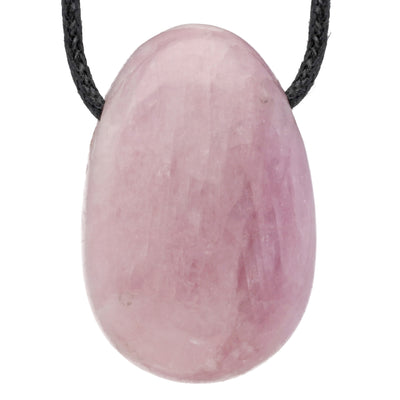
A Kunzite pendant at heart level is the classic application. Be sure to take it off when sunbathing — the color is light-sensitive.
2. As a bracelet — gently through the day
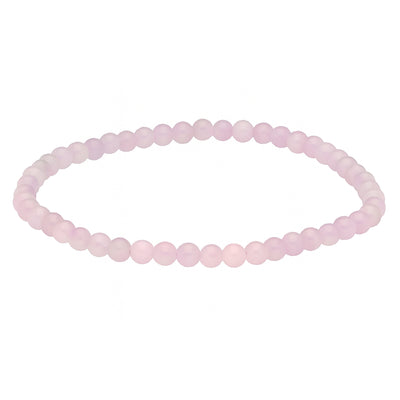
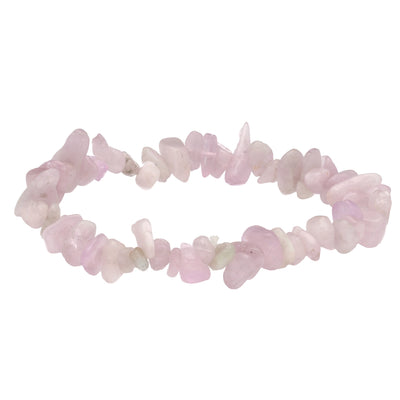
A bead or chip bracelet is said to have a calming effect throughout the day. Due to its cleavage, it is better to remove it during rough work.
3. On the bedside table — for a mind that won’t switch off
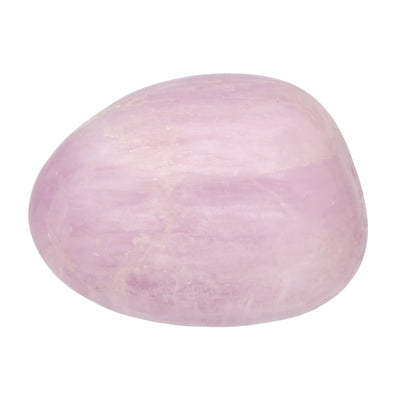
A tumble stone next to the bed is one of the most popular uses — and it is ideal there in the dark anyway.
4. As gemstone water — gentle and cool
Prepare briefly, use clear still water, and place in the shade. Traditionally used as a gentle, heart-opening treatment.
5. In meditation — letting go of control
Place the stone on the center of the chest, exhale, and consciously let go of one thing you currently cannot control.
Kunzite bei Lebensquelle Plus
Echte Naturqualität — versandfertig aus Waldbröl, geprüfter Fachhandel.
Cleaning and charging Kunzite
Clean & charge Kunzite
Kunzite is the most delicate stone in this series — perfect cleavage and light-sensitive color. With two simple rules, it will still stay beautiful for years.
Discharge
Rinse briefly under running lukewarm water and then dry it. No ultrasound — the perfect cleavage makes that too risky.
Alternatively, discharge overnight in a bowl with dry hematite tumble stones.
Charge
Charge only in moonlight or on a clear quartz cluster or amethyst geode. Never in the sun — Kunzite fades irreversibly with prolonged sun exposure.
Easiest: leave it permanently on a clear quartz cluster in the shade.
⚠️ Two rules for Kunzite: store in the dark (jewelry box instead of windowsill) and avoid impacts — due to perfect cleavage, it can split along the planes. Chemical cleaners and ultrasound are off-limits.
Recognizing authenticity
Kunzite is rarely counterfeited, but often confused with other stones. These features help with identification:
- Longitudinal striations are typical: Kunzite crystals show fine grooves running parallel to the long axis — a very reliable identifying feature.
- Pleochroism: Turn the stone in the light. Depending on the viewing angle, Kunzite shifts between pink, violet, and nearly colorless — rose quartz does not do this.
- Confusion with rose quartz: Rose quartz is noticeably more opaque, milkier, and more evenly colored. More on this in the rose quartz guide.
- Confusion with rubellite (pink tourmaline): Rubellite is a stronger pink to red and harder at 7–7.5 on the Mohs scale.
- Confusion with morganite: Morganite has a warmer, more peach-colored tone, while Kunzite has a cooler lilac tint.
Genuine Kunzite is delicate pink to lilac, translucent, shows longitudinal striations, and changes hue when turned. At Lebensquelle Plus, we carry it in natural quality.
Combining Kunzite with other stones
- Kunzite + rose quartz — the gentle heart duo — rose quartz warms, Kunzite makes letting go easier.
- Kunzite + clear quartz — clear quartz clarifies and amplifies the opening effect.
- Kunzite + amethyst — calm and clarity for the evening — also a beautiful color combination.
- Kunzite + moonstone — both are considered gentle emotional stones — popular in emotionally intense phases.
- Kunzite + smoky quartz — smoky quartz grounds the softness of Kunzite and eases tension.
Frequently asked questions about the effect of Kunzite
01 What does Kunzite do? +
In crystal healing, Kunzite is considered a stone of devotion and heart opening. It is said to make it easier to let go of control, strengthen tolerance, and help one accept criticism without feeling hurt. It is also said to strengthen the connection between heart and mind.
02 Does Kunzite really fade in the sun? +
Yes. Kunzite is highly light-sensitive and loses its delicate color with prolonged sun exposure — irreversibly. Therefore: store it in the dark, remove it when sunbathing, and charge it only in moonlight or on clear quartz, never in the sun.
03 Can Kunzite go in water? +
Yes, briefly and cool. Kunzite can be cleaned under running lukewarm water and used for gemstone water — but place the vessel in the shade, not in the sun. Due to the perfect cleavage, do not place chipped pieces in it and do not use ultrasound.
04 How do I care for Kunzite properly? +
Rinse briefly under lukewarm water and dry it. Charge only in moonlight or on a clear quartz cluster. Store in the dark, avoid impacts (perfect cleavage), no ultrasound and no chemical cleaners. Full guide: Clean and charge gemstones.
05 What is the difference between Kunzite and rose quartz? +
Kunzite is translucent, shows fine longitudinal striations, and changes between pink, violet, and nearly colorless when turned (pleochroism). Rose quartz is milky-opaque, more evenly colored, and does not show this color shift. Kunzite is also much more light-sensitive.
06 Which zodiac sign is Kunzite for? +
Kunzite is mainly assigned to Taurus, to which it is said to bring lightness and a willingness to let go. As secondary signs, it is considered suitable for Scorpio and Leo. As a heart stone, it suits anyone who wants a little more softness.
07 Which stones go well with Kunzite? +
Classic combinations: Kunzite + rose quartz (gentle heart duo), Kunzite + clear quartz (amplification), Kunzite + amethyst (evening calm), Kunzite + moonstone (emotional stones), Kunzite + smoky quartz (grounding).
08 Is Kunzite suitable as a gift? +
Very much so — Kunzite is a delicate, very personal gift for people going through emotionally intense times or for anyone who finds it hard to let things go. As a pendant, bracelet, or tumble stone, it stands for heart opening and comfort.
Conclusion
Kunzite — the stone of letting go. Delicate pink to lilac, translucent, and in crystal healing the classic for devotion, heart opening, and reconciliation. If you control a lot, forgive with difficulty, or are currently processing a farewell, Kunzite is the right choice — it just wants a little shade and gentle handling.
In our Kunzite range ↗ you will find bracelets, pendants, tumble stones, and necklaces in genuine natural quality — ready to ship from Waldbröl or available directly on site in our store in Nümbrecht.
Important note: The effects described here come from traditional crystal healing and are not scientifically proven. They do not replace medical diagnosis or treatment. If you have health concerns, please consult a doctor.
Further gemstone guides
- Clear Quartz effect — meaning, use & cleansing
- Amethyst effect — meaning, use & cleansing
- Clean and charge gemstones — the easy way
- Rose Quartz effect — the great heart stone
- Moonstone effect — feeling & intuition
- View all Kunzite products