


The Moonstone is probably the most feminine of all healing stones — shimmering, mysterious, with an inner glow that looks like captured moonlight. In crystal healing, it is considered a stone of intuition, feminine cycles, and dreams. In this guide, you’ll find everything about the attributed effects of Moonstone on the mind, body, and chakras, plus how to use it, care for it, and answers to the most frequently asked questions from our store in Nümbrecht.
Moonstone — quick facts at a glance
| Mineral class | Silicate / feldspar (potassium-sodium aluminosilicate) |
| Color | milky white to creamy, with a bluish-silver shimmer (adularescence) |
| Hardness (Mohs) | 6 out of 10 |
| Crystal system | monoclinic |
| Chakra | Sacral chakra (main) & crown chakra |
| Zodiac sign | Cancer (main), Pisces, Scorpio |
| Element | Water |
| Suitable for gemstone water | ⚠️ Only briefly — Moonstone is softer and more sensitive |
| Sunlight | Possible, but moonlight is the classic choice |
| Main sources | Sri Lanka, India, Madagascar, Brazil, Tanzania, Myanmar |
What is Moonstone? Mineralogy and origin
Moonstone is a feldspar mineral from the adularia group — chemically a potassium-sodium aluminosilicate. Its characteristic bluish-silver shimmer, known as adularescence or schiller, is created by a special internal structure: Moonstone consists of microscopically thin alternating layers of two feldspar varieties (orthoclase and albite). When light hits these layers, it is refracted and reflected — creating the blue-white “moonlight.”
The name comes directly from the moon — the ancient Greeks and Romans believed the stone was formed from solidified moonbeams. In Sanskrit, it is called “Chandrakanta” (beloved of the moon). With a Mohs hardness of 6, Moonstone is more delicate than quartz — it can scratch more easily and should not be stored together with harder stones.
The finest Moonstones come from Sri Lanka (classic blue-shimmering quality), India (rainbow moonstone with iridescent colors), and Madagascar. Rainbow Moonstone is, strictly speaking, a white labradorite, but is traditionally counted among Moonstones.
Meaning & history: The stone of women
Few stones are as closely associated with the feminine principle as Moonstone. In all great civilizations — from India to Greco-Roman antiquity and ancient Egypt — Moonstone was dedicated to moon goddesses: Diana, Artemis, Isis, Chandra. It was considered a stone of lovers, dreamers, and feminine cycles.
In the Middle Ages, Moonstone was a classic protective stone for pilgrims, especially on night journeys. Hildegard of Bingen recommended it for women’s ailments. In India, Moonstone is still considered sacred today — it is one of the traditional wedding stones and is given as a gift at engagements.
In modern crystal healing, Moonstone is considered the quintessential feminine healing stone — a universal companion for menstruation, pregnancy, childbirth, menopause, and all topics related to intuition, dreams, and the subconscious.
Attributed effects of Moonstone on the psyche
When someone comes to us looking for a stone for emotional comfort, intuition, or women’s issues, Moonstone is usually our first recommendation. In crystal healing, the following effects on the psyche and emotional life are attributed to it:
- Intuition & dreams: Moonstone is said to strengthen the inner voice, sharpen intuitive perception, and help one remember dreams.
- Emotional balance: It is traditionally used as a gentle stabilizer during mood swings — especially in hormonally active phases.
- Feminine energy & self-acceptance: Said to help embrace one’s own femininity — regardless of social expectations.
- Creativity & inspiration: Moonstone is considered a stone for artists, writers, and dreamers — said to dissolve creative blocks.
- Security & nesting: It is often used during pregnancy and after birth — said to radiate maternal protective energy.
- Letting go of old patterns: Like the moon passing through its phases, Moonstone is said to help release the past and begin anew.
Moonstone is therefore especially suitable for phases in which women’s issues, hormonal changes, intuition work, pregnancy, or dreaming are in the foreground.
Attributed effects of Moonstone on the body
In traditional crystal healing, Moonstone is attributed the following physical effects — these statements come from traditional descriptions and are not a substitute for medical diagnosis or treatment.
- Female cycle: Classically used for PMS, menstrual discomfort, and irregular cycles — described as having a regulating effect.
- Pregnancy & childbirth: Traditionally used as a companion through all phases — said to support nausea, labor, and breastfeeding.
- Menopause: Often recommended for hot flashes and hormonal fluctuations.
- Lymphatic system & fluid balance: Associated with a draining, lymph-supporting effect.
- Sleep & dreams: On the nightstand or under the pillow, Moonstone is said to promote vivid dreams and deep sleep.
- Digestion: Traditionally used as support for stomach issues and irritable bowel syndrome.
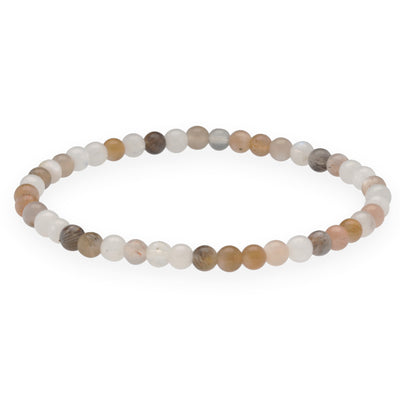
A particularly popular use is wearing it on the body as jewelry — Moonstone earrings, pendants, or bracelets accompany many women through all stages of life. View Moonstone jewelry and tumbled stones ↗

Moonstone and the sacral & crown chakra
In chakra teachings, Moonstone is primarily assigned to the sacral chakra (Svadhisthana) — the energy center below the navel, which stands for life force, sensuality, creativity, and the feminine principle. In addition, it has a secondary connection to the crown chakra (Sahasrara) — through its link to intuition and higher consciousness.
In practice, Moonstone is placed on the lower abdomen during meditation — it is said to help one feel their own feminine energy and connect with the inner cycle. Especially effective at full moon.
Moonstone & the 7 main chakras
Moonstone is primarily a sacral chakra stone (femininity, life force, creativity) with a second anchor in the crown chakra (intuition, higher consciousness).
Moonstone and the zodiac signs
Astrologically, Moonstone is the main stone for Cancer — the moon-ruled water sign traditionally associated with emotion, family, and intuition. It is a secondary stone for Pisces (intuition, spirituality) and Scorpio (transformation, depth).
But: Moonstone has a universal connection to the feminine principle in every zodiac sign — it suits every woman (and of course also men who want to strengthen their softer, intuitive sides), regardless of birth date.
Using Moonstone in everyday life
Here are the five most common uses from our practice:
1. As jewelry — the classic women’s companion
Moonstone earrings, pendants, and bracelets are the most popular form by far. The stone touches the skin, resonates with the body — especially Moonstone unfolds its effect most clearly when worn on the body. Tip: Moonstone pendants at the level of the sacral chakra (lower abdomen) or as earrings (close to the temple energy center).
2. On the nightstand or under the pillow
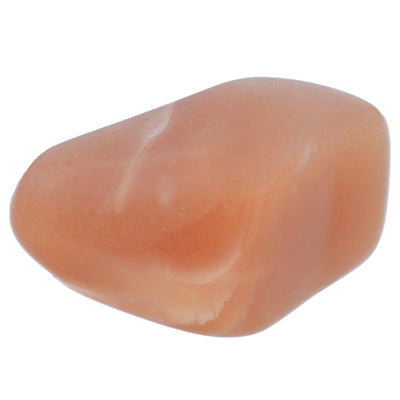
Moonstone is said to enhance dreams and make intuitive insights from sleep easier to access. A tumbled stone next to the bed is the classic setup — especially interesting for people who are interested in a dream journal or dream interpretation.
3. During pregnancy & women’s issues
One of the most traditional uses. During pregnancy, childbirth, breastfeeding, and menopause, Moonstone is described as a gentle, maternal companion. A small tumbled stone in the pocket or as a pendant close to the heart.
4. In meditation — especially at full moon
Place a Moonstone on the lower abdomen (sacral chakra) during meditation or hold it in the left hand (receiving). The connection is especially strong at full moon — many women do full-moon Moonstone rituals.
5. Careful gemstone water use
Moonstone is only conditionally suitable for gemstone water — it is softer and can suffer surface damage with prolonged contact with water. If at all: only briefly (max. 30 minutes) in water, ideally with cool (not hot) water. Alternatively: indirect method (Moonstone in a glass, glass placed in a larger bowl of water, no direct contact).
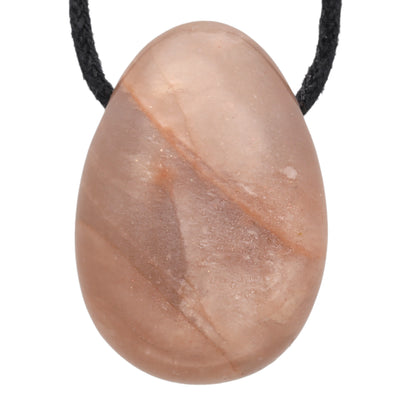
Moonstone bei Lebensquelle Plus
Echte Naturqualität — versandfertig aus Waldbröl, geprüfter Fachhandel.
Cleaning and charging Moonstone
Moonstone is a sensitive stone — softer than quartz, energetically very receptive. Especially because it is often worn on the body, regular cleansing is important.
Discharging (energetic cleansing)
- Brief rinse under lukewarm tap water — maximum 1 minute, not longer. Pat dry gently.
- In a bowl with hematite tumbled stones overnight — the gentlest method for sensitive Moonstones.
- Smudging with sage or Palo Santo — ideal if the stone should not go in water.
Charging (adding energy)
- Moonlight (full moon) — the classic method for Moonstone. Leave it by the window overnight, ideally during a full moon. Energetically perfect resonance.
- Rock crystal cluster — gentle recharging without strong light.
- Sunlight is possible, but not ideal — Moonstone is, after all, a moon stone.
Please do not: salt, salt water, or boiling hot water. Moonstone is more sensitive than quartz.
Clean & charge Moonstone
Two steps, one ritual — first discharge, then charge with moonlight.
Discharge
Briefly under water (max. 1 minute, lukewarm) or smudge. Moonstone is more sensitive than quartz.
Alternatives: bowl with hematite tumbled stones, sage/Palo Santo smudging.
Charge
Moonlight — one full-moon night by the window. Energetically perfect resonance for the moon stone.
Alternatives: rock crystal cluster, short sun exposure possible but not ideal.
⚠️ No salt, no hot water — Moonstone with Mohs 6 is softer than quartz.
Recognizing authenticity: Moonstone, Selenite or Opalite?
With Moonstone, there are a few typical confusions — and in the very affordable jewelry segment, also fakes:
- Selenite: Looks similarly milky white, but is a different mineral (a gypsum variety). Selenite is much softer (Mohs 2) and dissolves in water.
- Opalite: Synthetic milk glass with artificially created shimmer. Very common as “Moonstone” pendants. Recognizable by: overly uniform shimmer, often too intensely blue-iridescent, feels warmer than natural stone.
- Rainbow Moonstone (labradorite): Often sold as Moonstone — but strictly speaking it is a white labradorite with especially beautiful schiller. Energetically similar, mineralogically different.
- Star rose quartz with star effect is sometimes confused with Moonstone — but the “star” is six-rayed (Moonstone has no star).
Real Moonstone shows its shimmer only at certain angles of light — a Moonstone moved back and forth will suddenly “flash.” At Lebensquelle Plus, all Moonstones come from natural deposits (mainly Sri Lanka and India).
Combining Moonstone with other stones
Moonstone harmonizes especially well with other gentle and “feminine” stones:
- Moonstone + Rose Quartz — both soft, feminine energies. A classic combination during pregnancy and for self-love.
- Moonstone + Amethyst — for sleep and dream work. Both cooling, calming.
- Moonstone + Rock Crystal — Rock crystal amplifies the attributed Moonstone effect.
- Moonstone + Carnelian — cool meets warm. Said to create balance for cycle-related discomfort.
- Moonstone + Labradorite — both feldspar minerals, both shimmering. A classic for intuition and protection.
Frequently asked questions about the effects of Moonstone
01 What effect does Moonstone have on the psyche? +
In crystal healing, Moonstone is said to promote intuition, dream work, and emotional balance. It is considered a classic women’s stone — said to act as a gentle companion during mood swings, hormonal phases, and self-acceptance. These effects are not scientifically proven.
02 Which chakra is Moonstone assigned to? +
Moonstone is primarily a sacral chakra stone (life force, sensuality, feminine principle) with a second anchor in the crown chakra (intuition, higher consciousness).
03 Which zodiac sign is Moonstone for? +
Moonstone is the main stone for Cancer (the moon-ruled water sign) and a secondary stone for Pisces and Scorpio. Because of its connection to the feminine principle, however, it suits every woman regardless of zodiac sign.
04 Does Moonstone help during pregnancy? +
Traditionally, Moonstone is recommended throughout pregnancy — as a gentle companion for nausea, growth phases, and finally childbirth. There is no scientific evidence; many women wear it as an emotional comfort ritual.
05 How do you clean Moonstone properly? +
Moonstone is more sensitive than quartz (Mohs 6). Discharge only briefly under lukewarm water (max. 1 minute) or smudge with sage. Charge classically in moonlight (full moon). No salt, no hot water.
06 Can I put Moonstone in drinking water? +
Only to a very limited extent. Moonstone is softer and can suffer surface damage with prolonged contact with water. If at all: max. 30 minutes in cool water. Alternative: indirect method with glass-in-glass, without direct contact.
07 What is adularescence in Moonstone? +
Adularescence or “schiller” is the name for the characteristic bluish-silver glow that Moonstone shows in the light. It is created by microscopically thin alternating layers of two feldspar varieties (orthoclase and albite), which refract and reflect light.
08 What is the difference between Moonstone and Rainbow Moonstone? +
Moonstone is adularia feldspar with a white-blue shimmer. Rainbow Moonstone is mineralogically a white labradorite, so strictly speaking a different mineral — but it shows very similar schiller effects in more colorful tones. Energetically, both are considered related.
09 How can I tell if my Moonstone is real? +
Real Moonstone shows its shimmer only at certain angles of light — it suddenly flashes when turned. Synthetic Opalite has an overly uniform, overly intense blue shimmer and feels warmer. Natural stone remains noticeably cooler.
10 Is Moonstone suitable as a gift? +
Yes — Moonstone is traditionally considered a classic gift for women. Popular for engagements, weddings, pregnancy, childbirth, or simply as a symbolic “being a woman” gift. In India, a classic wedding stone.
Conclusion: Moonstone — the shimmering women’s stone
Moonstone is the classic companion for women: gentle, intuitive, shimmering. Anyone looking for a stone for hormonal topics, pregnancy, intuition, or simply more moonlight in everyday life can hardly overlook it. Whether as jewelry, a nightstand companion, or a meditation stone — Moonstone is one of the most beautiful and personal healing stones there is.
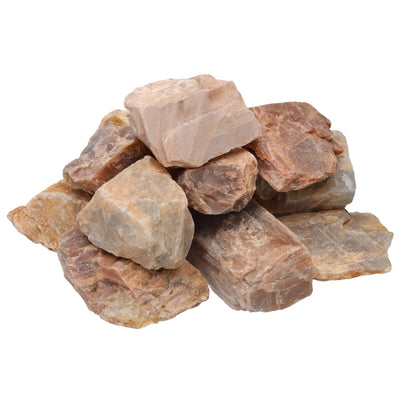
In our Moonstone range ↗ you’ll find rough stones, tumbled stones, jewelry, and special pieces from Sri Lanka and India — ready to ship from Waldbröl or available directly in our store in Nümbrecht.
Important note: The effects described here come from traditional crystal healing and are not scientifically proven. They do not replace medical diagnosis or treatment. If you have health concerns, please consult a doctor.
Further gemstone guides
- Rock Crystal effect — meaning, use & cleansing
- Amethyst effect — meaning, use & cleansing
- Rose Quartz effect — meaning, use & cleansing
- Clean and charge gemstones — the easy way
- View all Moonstone products
