



The Lapislazuli is the stone of truth and wisdom — deep blue like a starry sky, interspersed with golden pyrite inclusions. The pharaohs valued it even more highly than gold. In crystal healing, it is considered a stone of honest communication, intuition, and mental clarity. In this guide, you’ll find everything about the attributed effects of Lapislazuli on the mind, body, and chakras, plus application, care, and answers to the most common questions from our store in Nümbrecht.
Lapislazuli — quick facts at a glance
| Mineral class | Rock made of lazurite, calcite, pyrite, etc. |
| Color | deep blue to ultramarine, with golden pyrite speckles & white calcite veins |
| Hardness (Mohs) | 5 to 6 out of 10 |
| Crystal system | cubic (lazurite component) |
| Chakra | Throat chakra (main) & brow chakra |
| Zodiac sign | Sagittarius (main), Aquarius, Virgo |
| Element | Air / Water |
| Suitable for gemstone water | ⛔ No — sensitive surface, pyrite content |
| Sunlight | Possible, but moonlight is gentler |
| Main sources | Afghanistan (legendary quality, Sar-e-Sang), Chile, Russia |
What is Lapislazuli? Mineralogy and origin
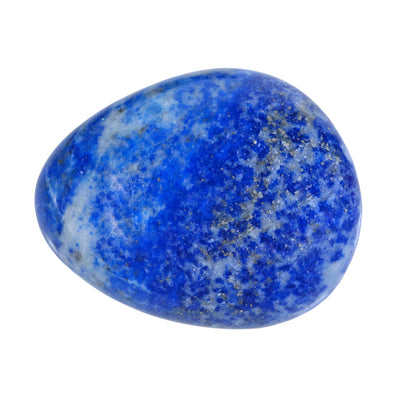
Strictly speaking, Lapislazuli is not a single mineral but a rock — a natural mixture of several minerals. The deep blue comes from lazurite, the golden speckles are pyrite (iron pyrite, often incorrectly called “fool’s gold”), and the white veins are calcite. The higher the lazurite content and the finer the pyrite distribution, the more valuable the stone.
The name combines two languages: “lapis” is Latin for stone, “lazuli” comes from the Persian “lazhward” (blue) — from this, the word “azure” also developed. From finely ground Lapislazuli, medieval painters produced the most precious blue in art history: ultramarine, more expensive than gold and reserved for the Madonna’s robe.
The world’s best quality has come for over 6,000 years from a single region: the Sar-e-Sang valley in Afghanistan. With a Mohs hardness of only 5–6, Lapislazuli is relatively soft and delicate — it should be handled with care.
Meaning & history: The stone of the pharaohs
Few stones have such a glorious history. In ancient Egypt, Lapislazuli was sacred — Tutankhamun’s death mask is inlaid with it, and Cleopatra used ground Lapis as eyeshadow. It was considered a stone of the gods, the sky, and truth. The Egyptian goddess Maat, guardian of truth and justice, wore a Lapislazuli pendant.
In Mesopotamia, Lapislazuli adorned the royal tombs of Ur. In the Renaissance, the ultramarine pigment made from it was so valuable that patrons listed it separately in contracts. Hildegard of Bingen recommended Lapislazuli for eye ailments and fever.
In modern crystal healing, Lapislazuli is considered the stone of truth, honest communication, and spiritual guidance — recommended for anyone who wants to find their voice and express themselves authentically.
Attributed effect of Lapislazuli on the psyche
When someone comes to us looking for a stone for communication, truth, or mental clarity, Lapislazuli is the classic recommendation. In crystal healing, the following effects are attributed to it:
- Honest communication: Lapislazuli is said to help speak one’s truth — clearly, without harshness, without withdrawal.
- Mental clarity & wisdom: Traditionally associated with a clear, orderly mind — useful for complex decisions.
- Intuition & inner guidance: Said to strengthen the connection to one’s inner voice and make intuitive insights accessible.
- Self-expression & authenticity: The stone for anyone who “makes themselves smaller” at work or in relationships — it is said to help find one’s own voice.
- Conflict & truth: Used to approach conflicts honestly and constructively rather than avoid them.
- Stress relief & inner calm: The deep blue is calming for many people — said to reduce mental overstimulation.
Lapislazuli is therefore especially suitable for phases in which communication, truth, self-expression, learning, or mental clarity are in focus — presentations, difficult conversations, studying, creative writing.
Attributed effect of Lapislazuli on the body
In traditional crystal healing, Lapislazuli is attributed the following physical effects — these statements come from traditional descriptions and are not a substitute for medical diagnosis or treatment.
- Throat & larynx: Classically used for throat discomfort, hoarseness, and voice problems — the throat chakra stone.
- Head & migraines: Traditionally placed on the forehead or neck for headaches and migraines.
- Eyes: Hildegard of Bingen already recommended Lapis for eye ailments.
- Blood pressure & nervous system: Described as having a calming, regulating effect.
- Thyroid: Due to its association with the throat chakra, traditionally used for thyroid-related topics.
Important note on gemstone water: Lapislazuli is not suitable for gemstone water — the pyrite content can react, the calcite veins and the sensitive surface suffer from water. It is better to wear the stone as jewelry or use it placed on the body. View Lapislazuli jewelry and tumbled stones ↗

Lapislazuli and the throat & brow chakra
In chakra teachings, Lapislazuli is primarily assigned to the throat chakra (Vishuddha) — the energy center at the larynx, which stands for communication, self-expression, and speaking one’s truth. Its deep blue color energetically matches the frequency of this chakra.
Secondarily, Lapislazuli has a strong connection to the brow chakra (Ajna, third eye) — the center for intuition and mental clarity. Placed on both chakras, Lapislazuli is said to strengthen the “upper communication axis”: think clearly and speak clearly.
Lapislazuli & the 7 main chakras
Lapislazuli is the stone of the upper communication axis — throat chakra (self-expression, truth) and brow chakra (intuition, mental clarity).
Lapislazuli and the zodiac signs
Astrologically, Lapislazuli is the main stone for Sagittarius — the zodiac sign of the search for truth, philosophy, and broad horizons. The stone is said to help Sagittarius communicate insights clearly and tactfully.
As a secondary stone, it suits Aquarius (mental clarity, idealism) and Virgo (precise self-expression). As a universal stone of truth and communication, however, Lapislazuli suits every zodiac sign — especially when the topic of “expressing yourself authentically” is currently relevant.
Using Lapislazuli in everyday life
Here are the four most common uses from our practice:
1. As a necklace — directly at the throat chakra
The most energetically direct use: a Lapislazuli pendant or necklace worn at the level of the larynx. Especially popular with people who speak a lot professionally — teachers, coaches, singers, speakers.
2. In meditation — placed on the forehead or throat
During meditation, place Lapislazuli on the brow chakra (between the eyebrows) for mental clarity, or on the throat chakra for topics related to expression and truth. The stone is said to help organize inner insights.
3. On the desk — for writing & learning
A Lapislazuli tumbled stone or rough stone at the workplace is traditionally recommended for concentration, clear thinking, and learning — especially for studying, exam preparation, or creative writing.
4. Before difficult conversations — as a talisman
Hold a small Lapislazuli in your hand or put it in your pocket before a clarifying conversation, negotiation, or conflict. It is said to help express your own truth clearly and without harshness.
Lapis Lazuli bei Lebensquelle Plus
Echte Naturqualität — versandfertig aus Waldbröl, geprüfter Fachhandel.
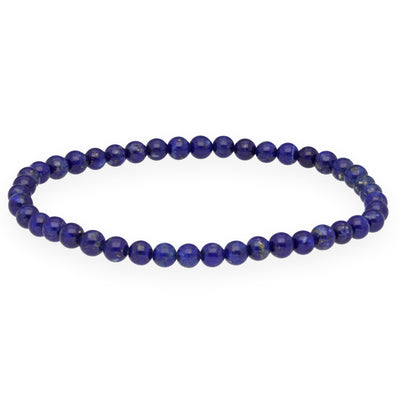
![[slot:MAIN] MAIN polished](http://solunaspring.com/cdn/shop/files/SQUARE_new_a86ac4b2-df76-45bb-a8f9-5be0a55ea027.jpg?v=1787043208&width=400)
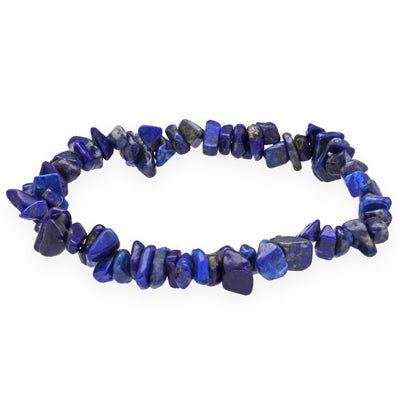
Cleaning and charging Lapislazuli
Lapislazuli is a delicate stone — relatively soft with Mohs 5–6, and also sensitive to water because of its pyrite and calcite content. Care for it thoughtfully.
Discharging (energetic cleansing)
- Rinse briefly with lukewarm water (max. 1 minute) and dry with a soft cloth — lexicon recommendation.
- Smudging with sage or Palo Santo — the ideal alternative without water.
- In a bowl with hematite tumbled stones overnight — dry and gentle.
Charging (adding energy)
- Moonlight (full moon) — the gentle, classic method for delicate Lapis.
- Rock crystal cluster — gentle recharging, ideal.
- Sunlight is possible briefly, but moonlight is the better choice.
Please do not: use salt, salt water, or long water baths. Also no acid — the calcite veins react sensitively.
Clean & charge Lapislazuli
Two steps, one ritual — and with delicate Lapis, always dry.
Discharge
Rinse briefly with lukewarm water and gently dry with a soft cloth — max. 1 minute, do not soak longer.
Alternatives: smudging (sage/Palo Santo) or overnight on hematite tumbled stones.
Charge
Moonlight — a full moon night on the windowsill. Gentle for the soft stone.
Alternative: on a rock crystal cluster.
⚠️ Do not soak in water for longer than 1 minute — the calcite veins and pyrite content are sensitive. No salt, no acid.
Recognizing authenticity: Lapislazuli, dyed jasper, or sodalite?
Lapislazuli is often imitated or confused with other stones:
- Dyed howlite or jasper: White howlite is dyed blue and sold as “Lapis.” Recognizable by: overly uniform blue, no real pyrite sparkle, color may rub off with acetone.
- Sodalite: A genuine close relative — also blue, but darker and more matte, without golden pyrite, with white veins. Often sold as a cheaper substitute.
- “Lapis” made from resin/pressed material: Ground remnants pressed into resin. Recognizable by the too-perfect distribution of pyrite speckles.
Genuine Lapislazuli shows real metallic pyrite sparkle (golden points glitter in the light), uneven deep blue, and sometimes white calcite veins. At Lebensquelle Plus, Lapislazuli comes from verified Afghan natural quality.
Combining Lapislazuli with other stones
Lapislazuli harmonizes especially well with stones that support communication and clarity:
- Lapislazuli + Rock crystal — Rock crystal is said to amplify the effects of Lapis.
- Lapislazuli + Amethyst — both for the upper energy center. A classic meditation combination for intuition.
- Lapislazuli + Sodalite — both throat chakra stones. Sodalite brings logic, Lapis brings truth.
- Lapislazuli + Rose quartz — truth meets gentleness. A good combination for clarifying conversations that should remain loving.
- Lapislazuli + Tiger’s eye — clarity + courage. For situations where you also need to stand up for your truth.
Frequently asked questions about the effect of Lapislazuli
What effect does Lapislazuli have on the psyche?
In crystal healing, Lapislazuli is said to promote honest communication, mental clarity, and self-expression. It is considered a stone of truth — said to help find one’s own voice and express oneself authentically. These effects are not scientifically proven.
Which chakra is Lapislazuli assigned to?
Lapislazuli is primarily a throat chakra stone (communication, self-expression, truth) with a secondary connection to the brow chakra (intuition, mental clarity).
Which zodiac sign is Lapislazuli for?
Lapislazuli is the main stone for Sagittarius and a secondary stone for Aquarius and Virgo. As a universal stone of truth and communication, however, it suits every zodiac sign.
Can Lapislazuli go in water?
Briefly yes, for long periods no. With Mohs 5–6, Lapislazuli is more delicate — a short rinse under lukewarm water (max. 1 minute) is fine, then dry with a soft cloth. Do not use for gemstone water, and do not soak longer — the pyrite can react, and the calcite veins suffer.
How do you clean Lapislazuli properly?
Rinse briefly under lukewarm water (max. 1 minute) and dry with a soft cloth. Alternatively, smudge it or place it on hematite overnight. Charge gently in moonlight or on a rock crystal cluster. No salt, no acid.
What are the golden dots in Lapislazuli?
That is pyrite (iron pyrite), often called fool’s gold. Real pyrite sparkles metallically in the light. Evenly distributed, overly perfect speckles, on the other hand, indicate an imitation made from pressed material.
How can I tell if my Lapislazuli is real?
Genuine Lapislazuli has real metallic pyrite sparkle, uneven deep blue, and sometimes white calcite veins. Dyed howlite shows overly uniform blue and may rub off with acetone.
What is the difference between Lapislazuli and Sodalite?
Both are blue, but: Lapislazuli is bright ultramarine with golden pyrite, while Sodalite is darker and more matte without pyrite, but with more white veins. Sodalite is often sold as a cheaper Lapis substitute — energetically similar, mineralogically different.
Does Lapislazuli help with fear of public speaking?
Traditionally, Lapislazuli is recommended as a talisman before lectures, presentations, or difficult conversations — it is said to help speak one’s truth clearly and calmly. This is not scientifically proven; however, many users describe a feeling of empowerment.
Why was Lapislazuli more expensive than gold?
Finely ground Lapislazuli was used to make ultramarine pigment — the most precious blue in art history. In the Renaissance, it was more expensive than gold and was listed separately in painters’ contracts, usually reserved for the Madonna’s robe.
Conclusion: Lapislazuli — the deep blue stone of truth
Lapislazuli is the classic stone for communication, truth, and mental clarity. If you are looking for a stone for self-expression, difficult conversations, learning, or creative work, this is the right choice. Whether as a necklace, meditation stone, or desk companion — Lapislazuli is a stone with 6,000 years of history and a deep, calm presence.
In our Lapislazuli range ↗ you’ll find rough stones, tumbled stones, jewelry, and special pieces in Afghan natural quality — ready to ship from Waldbröl or directly on site in our store in Nümbrecht.
Important note: The effects described here come from traditional crystal healing and are not scientifically proven. They do not replace medical diagnosis or treatment. If you have health concerns, please consult a doctor.
Further gemstone guides
- Rock crystal effect — meaning, application & cleansing
- Amethyst effect — meaning, application & cleansing
- Moonstone effect — meaning, application & cleansing
- Clean and charge gemstones — the easy way
- View all Lapislazuli products
